Breakfast nearly broke us during flares. These 5 foods didn't.
# 5 Breakfast Foods That Stayed Safe During Our Worst Flares
When my son was in the middle of a bad flare, breakfast was the meal that broke us both. He'd sit down, eat something that seemed harmless, and be doubled over before he made it to school. I'm a naturopath. I know food. And I still got it wrong — because I was thinking about nutrition when I should have been thinking about tolerance.
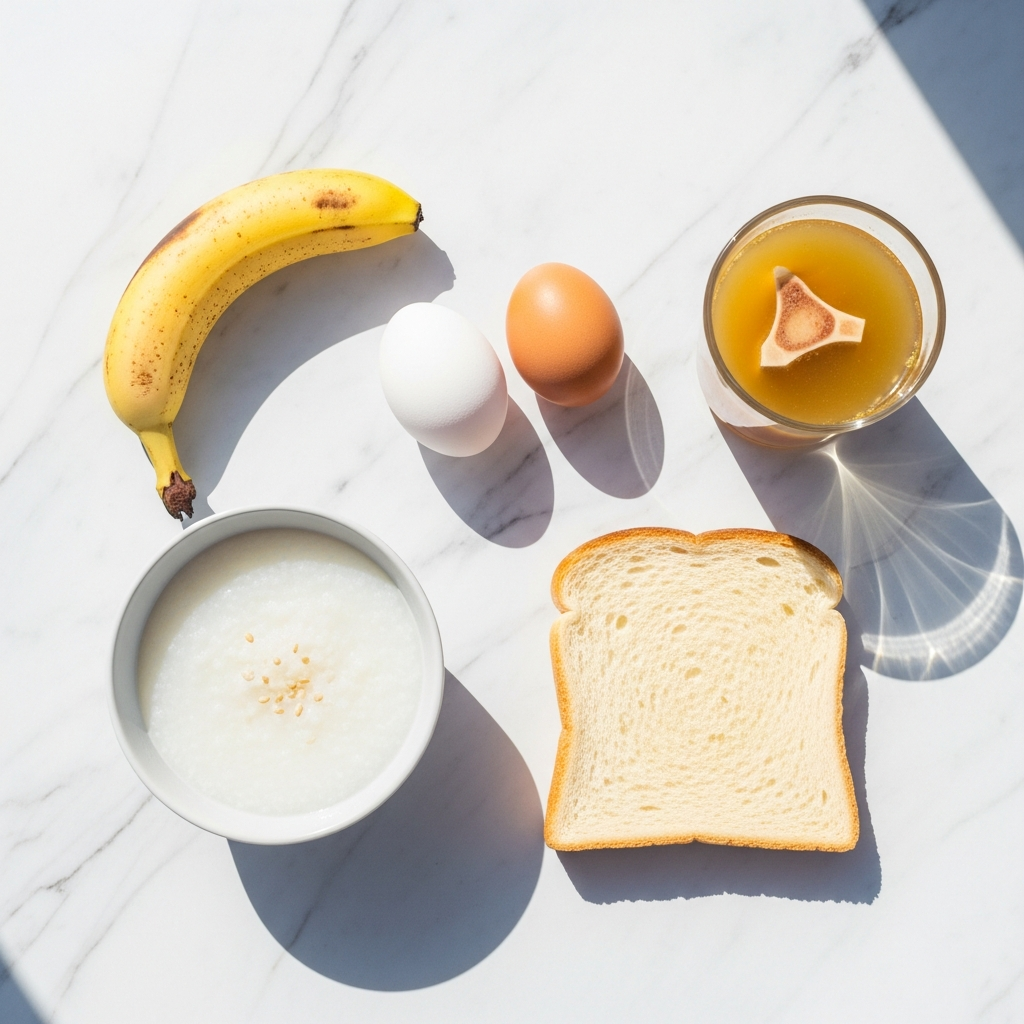
The short answer, if you need it right now: during an active Crohn's flare, the safest breakfast foods are those that are low in fibre, easy to digest, soft in texture, and gentle on an already-inflamed gut lining. Think white rice congee, soft scrambled eggs, ripe banana, plain white toast, and warm bone broth. These aren't forever foods — they're a starting rung on what I call the Safe Food Ladder.
## Why Does Breakfast Feel So Hard With Crohn's?
Mornings are genuinely difficult for people with active Crohn's disease. The gastrocolic reflex — the natural wave of movement your gut makes after eating — is strongest first thing in the morning. For a healthy gut, that's just a trip to the bathroom. For an inflamed gut, it can mean cramping, urgency, and pain within minutes of eating.
The Crohn's & Colitis Foundation notes that there is no single diet that works for everyone with IBD — but during a flare, low-residue, low-fibre foods are consistently better tolerated because they leave less material in the colon and reduce the mechanical load on an already-stressed digestive system.
Key takeaway: During a flare, the goal of breakfast isn't nutrition — it's tolerance. You can build nutrition back in once the gut calms down.
I had to learn this the hard way with my son. I kept trying to make his breakfast balanced when what his body needed was safe.
## The 5 Foods That Stayed Safe for Us
These aren't medical prescriptions. They're the foods that worked at our kitchen table — and that I've seen work consistently in my naturopathic practice with families navigating Crohn's. Always work with your gastroenterologist and dietitian to find what's right for your specific situation.
### 1. White Rice Congee (Rice Porridge)
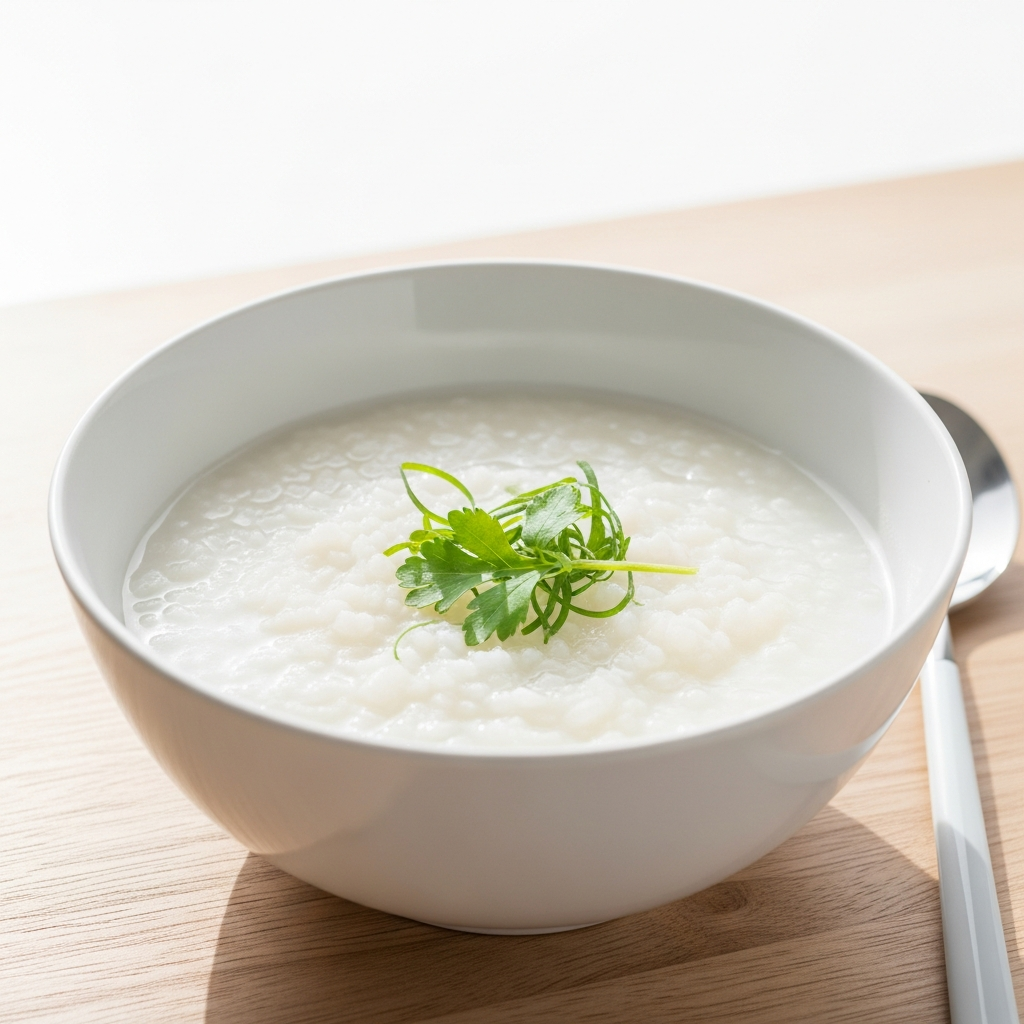
This is the one I come back to again and again. Congee is simply white rice cooked in a large amount of water until it becomes a thick, smooth porridge. It's been used in Asian cultures for centuries as a recovery food — and there's a reason it's survived that long.
White rice is one of the lowest-residue grains available. When cooked down into congee, it's even easier to digest — the starch is partially broken down by the long cooking process. It's warm, it's filling without being heavy, and it's easy to eat even when appetite is low. Add a small pinch of salt and a drizzle of olive oil if tolerated.
### 2. Soft Scrambled Eggs
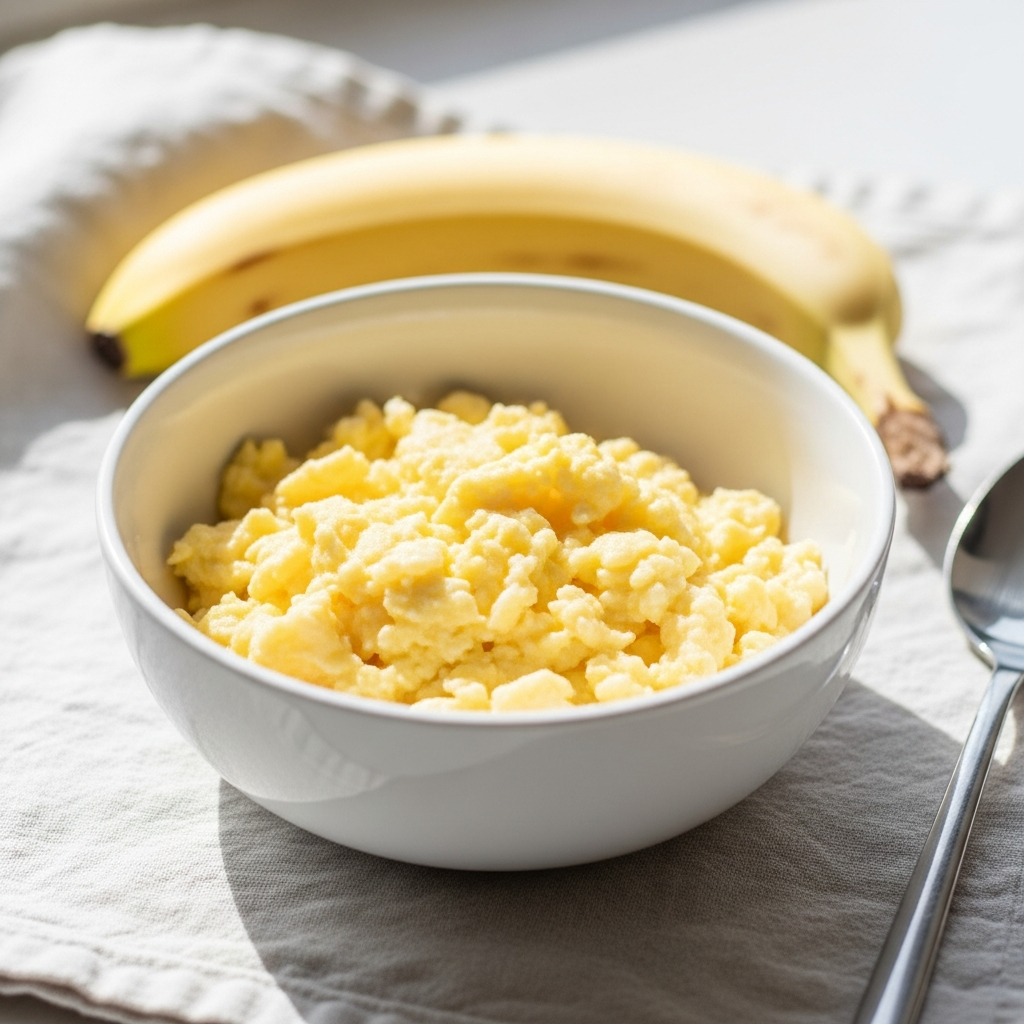
Eggs are one of the most gentle protein sources available during a flare. They're easy to digest, they don't carry fibre, and they provide essential amino acids that a body under inflammatory stress genuinely needs. The key word is soft — overcooked rubbery eggs are harder on the gut than silky, barely-set scrambled eggs cooked low and slow.
My son could almost always manage two soft scrambled eggs even on difficult days. If dairy is a trigger, cook them in a small amount of olive oil instead of butter.
### 3. Ripe Banana
Not just any banana — a ripe one. The riper the banana, the more the resistant starch has converted to simple sugars, making it far easier to digest. Ripe bananas also contain pectin, a soluble fibre that is generally well-tolerated even during flares and can actually help with stool consistency.
Bananas are soft, require no preparation, and are easy to eat even when nausea is present. They were often the first thing my son would reach for on his worst mornings.
### 4. Plain White Toast with a Little Butter
I know — white bread doesn't feel like a "health food." But during a flare, we're not optimising for nutrition, we're optimising for tolerance. White bread is low in fibre, easy to chew, and absorbs quickly. Lightly toasted, it's even gentler because the toasting process slightly changes the starch structure.
A thin scrape of butter adds a small amount of fat to slow digestion just enough to prevent blood sugar spikes, without overloading the gut. If butter is a trigger, plain dry toast works too.
### 5. Warm Bone Broth
On the days when eating felt impossible, this was what we turned to. Bone broth is rich in gelatin, glycine, and easily absorbed minerals. It's warm and soothing, it requires almost no digestive effort, and it can help support the gut lining — something that matters during active inflammation.
It's not a meal on its own, but paired with plain toast or congee, it rounds out a flare-safe breakfast beautifully. Look for a good quality store-bought broth with no added onion or garlic (both common triggers), or make your own and freeze it in portions.
## How the Safe Food Ladder Works
The Safe Food Ladder is the framework I use with families navigating Crohn's — including my own. The idea is simple: you start at the bottom rung (the safest, most tolerated foods) and only move up when your gut gives you the green light.
These 5 breakfast foods are the bottom rung. They're not forever. They're not the goal. They're the foundation you build from.
As inflammation settles — with your medical team's guidance and treatment — you can begin to reintroduce foods one at a time, watching for tolerance. Oats might come back. Avocado might come back. Even some fruits and vegetables can come back. But you don't start there. You start here.
My husband went through this process after each of his three surgeries. Each time, we came back to the basics — congee, eggs, banana, toast, broth — and built back up slowly. He's now 20+ years in deep remission with no flares. The ladder works.
## What This Supports (and What It Doesn't Replace)
I want to be clear: food choices are one piece of the puzzle. They support your medical care — they don't replace it. If your son or daughter (or you) is in an active flare, please work closely with your gastroenterologist. Medication, monitoring, and medical management come first.
What we can do alongside that care is reduce the daily friction. Make mornings less frightening. Give the gut a gentler starting point each day. That's what this list is for.
---
## Common Questions
Can I eat oats during a Crohn's flare?
Oats contain soluble fibre, which is generally better tolerated than insoluble fibre, but during an active flare they can still be too much for some people. I'd suggest trying plain, well-cooked oats (not raw or overnight oats) only once symptoms have begun to settle, not at the peak of a flare.
Is yoghurt safe during a flare?
Dairy tolerance varies widely in Crohn's. Some people tolerate plain, low-fat yoghurt well; others find dairy worsens symptoms. If dairy has been a trigger for you, it's worth avoiding it during a flare and reintroducing it slowly during remission.
Why is fibre a problem during a flare?
High-fibre foods increase the bulk and transit speed of stool, which can worsen cramping, urgency, and discomfort when the gut is already inflamed. According to the Mayo Clinic, a low-fibre diet is often recommended during Crohn's flares to give the intestines a chance to rest.
How long do I stay on flare foods before reintroducing other foods?
This is a conversation to have with your gastroenterologist and dietitian — it depends on how your symptoms are tracking and what your treatment plan looks like. As a general guide, I'd suggest waiting until symptoms have been consistently calmer for several days before trying to move up the ladder.