His Crohn's was controlled. He still wouldn't eat.
# His Crohn's was controlled. He still wouldn't eat.
When your Crohn's is technically in remission but eating still feels dangerous, the problem isn't your inflammation — it's your nervous system. Food fear after a Crohn's flare is a recognised pattern where the gut-brain axis stays locked in a protective state even after inflammation settles. It's real, it's common, and it responds to the right support alongside your medical care.
I want to start there — with the answer — because I spent too long searching for someone to just say it plainly. You are not imagining this. You are not being dramatic. And you are not doing anything wrong.
---
## Why does food still feel dangerous when my Crohn's is controlled?
My son's gastroenterologist called with good news. Inflammation markers were down. Colonoscopy looked clear. "He's doing really well," she said.
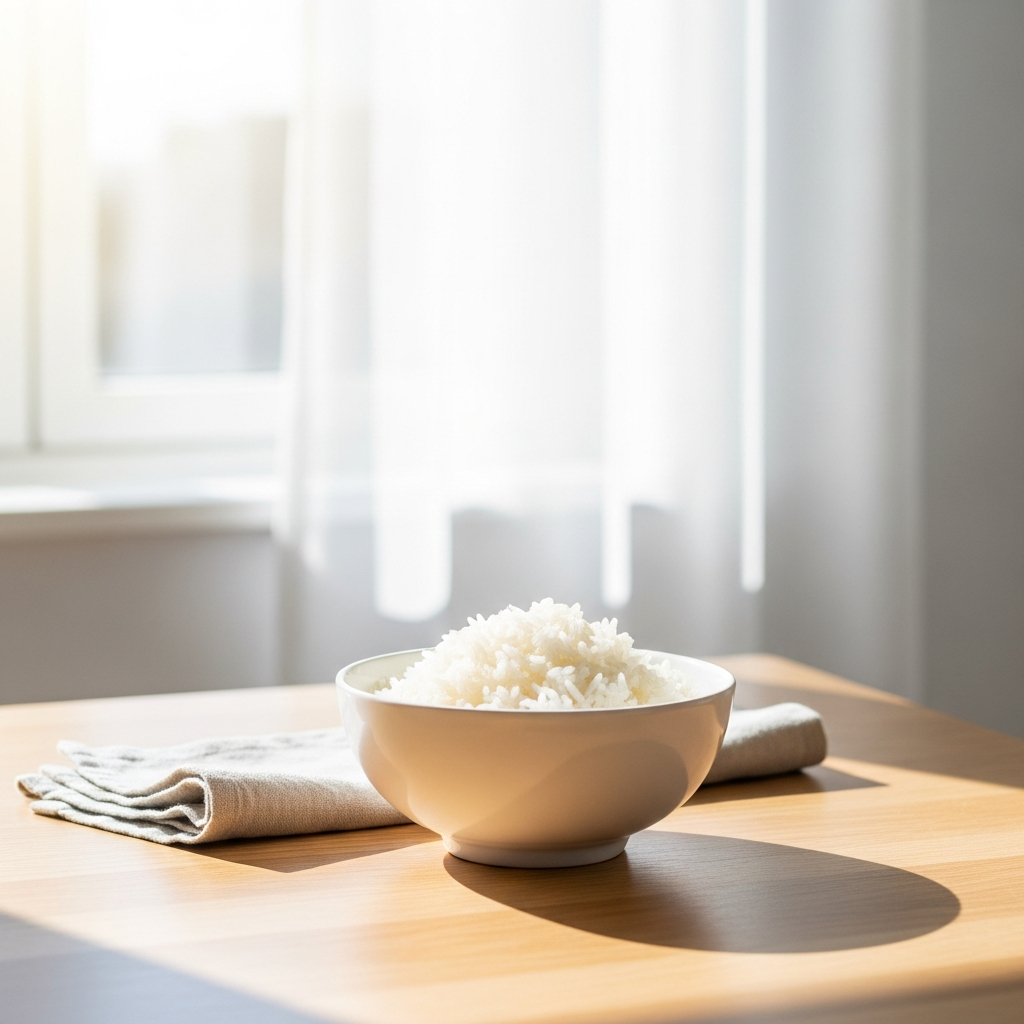
That night, he pushed a bowl of pasta around his plate for twenty minutes and then quietly asked if he could just have plain rice.
He wasn't in a flare. He was scared.
And I understood it completely — because I'd watched him spend months learning, at a cellular level, that eating hurt. Every meal had been a gamble. Every ingredient a potential trigger. His body had done exactly what bodies are designed to do: it had built a protection system. A finely tuned alarm that fired every time food appeared.
The problem is that alarm doesn't come with an off switch.
Key takeaway: When eating has repeatedly caused pain, the nervous system forms a conditioned threat response to food — independent of whether inflammation is still present. This is the gut-brain axis doing its job, not a sign that something is still wrong.
The Crohn's & Colitis Foundation notes that anxiety and depression are significantly more common in people with IBD than in the general population — and that psychological symptoms often persist even during remission. What we don't talk about enough is that this anxiety frequently centres specifically on food.
---
## What is actually happening in the gut-brain axis?
The gut and the brain are in constant two-way conversation via the vagus nerve — a communication highway that carries signals in both directions. During active Crohn's, that highway is flooded with pain signals, urgency signals, and inflammatory messages. The brain learns: food in = danger out.
Even after the gut heals, the brain's threat-detection system — the amygdala — can stay on high alert. Researchers call this central sensitisation: the nervous system remains hypersensitive long after the original cause of pain has resolved. You might recognise it as the way a loud noise still makes you flinch weeks after a stressful event.
For someone with Crohn's, the "loud noise" is a meal. And flinching looks like food restriction, pre-meal anxiety, avoidance of social eating, or an inability to enjoy food even when you're hungry.
As a naturopath, I see this as a whole-body issue — not just a gut issue. The gut needs to heal, yes. But the nervous system needs to learn safety again. Those are two different processes, and they don't always happen on the same timeline.
Key takeaway: Central sensitisation means the nervous system can stay in a pain-ready state after inflammation resolves — and supporting nervous system regulation is a legitimate part of recovery, not a luxury.
---
## What helped our family — and what I'd suggest you explore with your team
I want to be careful here, because every person's Crohn's is different, and nothing I share replaces your gastroenterologist or your dietitian. But I can tell you what we learned — as a family, and in clinic — about the kinds of support that helped alongside medical care.
1. Naming it changed everything.
The first shift for my son came when his doctor acknowledged that what he was experiencing was real and had a name. Food fear. Conditioned avoidance. Gut-brain dysregulation. Whatever you call it — hearing "this is a recognised thing that happens" visibly relaxed his shoulders. Validation is not nothing. It is often the beginning.
2. Gradual, low-stakes food exposure — not food challenges.
This is different from a reintroduction protocol. It's not about testing what you can tolerate. It's about rebuilding a sense of safety around eating itself. We started with foods he already knew were safe and made the experience as calm as possible — no screens, no rushing, no conversation about symptoms. Just: food, table, presence. Small. Quiet. Repeated.
If food restriction has become significant, a psychologist who specialises in health anxiety or a dietitian trained in the gut-brain connection can guide this process far more effectively than going it alone.
3. Vagal nerve support as a daily practice.
Because the vagus nerve is the physical pathway of the gut-brain connection, practices that support vagal tone can genuinely help the nervous system shift out of threat mode. The research on this is growing — slow diaphragmatic breathing, humming, cold water on the face, gentle movement. None of these are cures. All of them are tools. We used breathing exercises before meals for a period of time, and the difference in my son's body language at the table was noticeable.
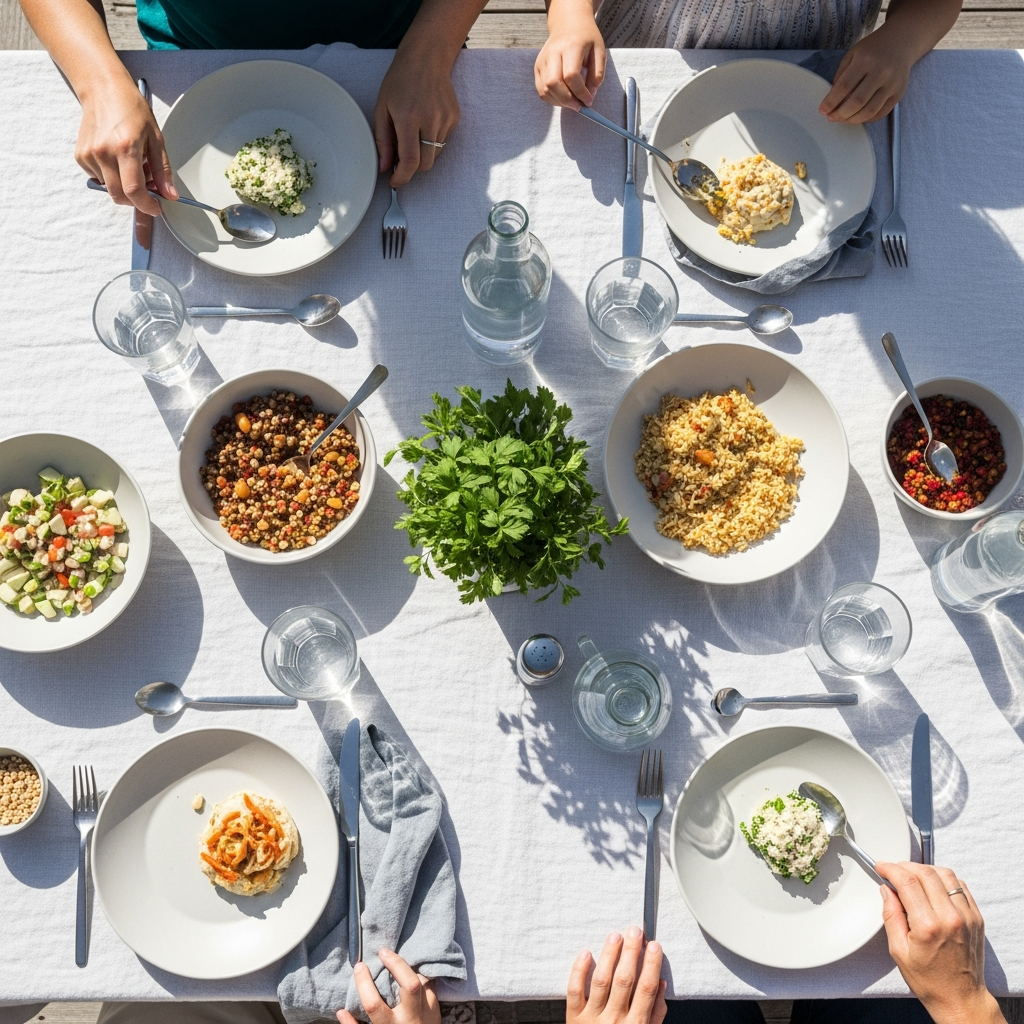
4. Not eating alone.
This sounds simple. It mattered enormously. Eating in the presence of someone calm and safe — someone who wasn't watching for symptoms or asking anxious questions — helped regulate his nervous system through co-regulation. We are social animals. Shared meals are ancient medicine.
---
## When to ask for more support
Food fear exists on a spectrum. For some people, it's a background hum that fades as remission holds. For others, it becomes food avoidance restrictive intake disorder (ARFID) or significant health anxiety that genuinely affects nutrition and quality of life.
According to research published in journals covering IBD and psychological health, disordered eating behaviours are more prevalent in people with IBD than in the general population — and they often go unaddressed because everyone is focused (understandably) on the physical disease.
If you or your child are:
- Restricting to fewer than 5-6 "safe" foods
- Losing weight during remission
- Avoiding all social eating
- Experiencing panic symptoms before or during meals
…please bring this up with your gastroenterologist or GP. Ask for a referral to a psychologist or a dietitian with IBD experience. This is medical. It deserves medical attention.
Key takeaway: Food fear that significantly restricts intake or quality of life during remission warrants support from a psychologist or IBD-trained dietitian — it is not a willpower issue.
---
## Common questions
Is it normal to be scared of food even when Crohn's is in remission?
Yes. Food fear during remission is well-documented in the IBD community. The gut-brain axis can remain in a heightened state after inflammation settles, making eating feel unsafe even when it isn't.
Can food fear make Crohn's symptoms worse?
Stress and anxiety activate the sympathetic nervous system, which can increase gut motility and sensitivity. So yes — the fear itself can create real physical symptoms, which then reinforce the fear. Breaking this cycle is part of recovery.
Should I push through food fear and just eat normally?
Forced exposure without support can backfire. Gradual, calm reintroduction — ideally guided by a dietitian or psychologist — is more effective than pushing through alone.
How long does food fear last after a Crohn's flare?
This varies widely. For some people it resolves within weeks of remission. For others it persists for months or years, especially if the flare was severe or prolonged. Seeking support earlier rather than later makes a difference.
---
If you're reading this and recognising your own kitchen table in these words — I see you. The work of remission is not just physical. Your nervous system went through something. Give it the same care you'd give your gut.
This supports your medical care. It doesn't replace it. Always keep your gastroenterologist in the loop.
— Kate
Naturopath. Crohn's mum. The Crohn's Method.