I kept asking: why didn't we see it coming?
The short answer: no consumer wearable can predict a Crohn's flare yet — but the science behind physiological signals like heart rate variability (HRV), skin temperature, and activity patterns is real, validated, and worth paying attention to right now. Here's what that means for your family today.
---
When my son's flare hit, I kept turning it over in my mind.
The night before, he hadn't slept well. He'd been quieter than usual. He picked at his dinner. And I'd done what every Crohn's parent does — I explained it away. He has an exam coming up. He ate something that didn't agree with him. He's just tired.
We can always find a reason. That's the cruel thing about early flare signals. They look exactly like ordinary life.
So when I started seeing wearable tech being marketed to IBD families — your watch can predict a flare three days before you feel it — I felt that pull immediately. Of course I did. Every Crohn's parent and every person living with this disease wants an early warning system. We want the gap between "something's off" and "we're in the emergency department" to close.
But as a naturopath, I also know that the marketing moves faster than the science. And families like ours deserve a straight answer about what's real — and what's still a sales pitch.

## What Does the Research Actually Show?
Let me be direct: no consumer wearable currently has FDA clearance specifically for predicting Crohn's disease flares. That's the honest starting point.
But that's not the whole picture — and this is where it gets genuinely interesting.
There is a growing body of published research around physiological signals that correlate with inflammatory activity in IBD patients. The three signals getting the most attention right now are:
Heart rate variability (HRV). This is the one I find most compelling. Research published in peer-reviewed journals shows that HRV — the variation in time between heartbeats — tends to be lower in IBD patients during periods of active inflammation. The autonomic nervous system and the gut are deeply connected, and when inflammation is ramping up, that connection shows up in HRV data. It's not a crystal ball, but it's not nothing either.
Resting heart rate. An elevated resting heart rate can be an early signal that the body is under physiological stress — sometimes before symptoms are obvious. This is something you can track with almost any wearable right now.
Activity and sleep patterns. A drop in daily step count, disrupted sleep, or changes in sleep quality can precede a flare. My GI actually asked us why we were tracking HRV when I brought it up — it opened a really useful conversation. He hadn't seen families doing this yet. That conversation matters.
The key takeaway here: these signals are real and worth tracking, but they are indicators to discuss with your medical team — not diagnostic tools.
## The "FDA Cleared" Trap
This is something I want every Crohn's family to understand, because the marketing around this is genuinely misleading.
When a wearable brand says their device is "FDA cleared," that is almost certainly true — for general wellness monitoring. What it does not mean is that the device has been cleared for IBD-specific flare prediction. Those are completely different things.
A device can be FDA cleared as a general wellness wearable and have zero clinical validation for Crohn's disease specifically. When someone is applying general HRV or heart rate data to IBD tracking, they are making an extrapolation — sometimes a reasonable one based on emerging research, but an extrapolation nonetheless.
So when you see an ad promising your watch will predict your next flare: ask what the specific IBD indication is. If there isn't one, you're looking at a general wellness device being marketed to a vulnerable audience. That doesn't make it useless — but it does mean you need to hold it lightly.
## What You Can Actually Do Right Now
Here's the plan — practical, honest, and something you can start this week.
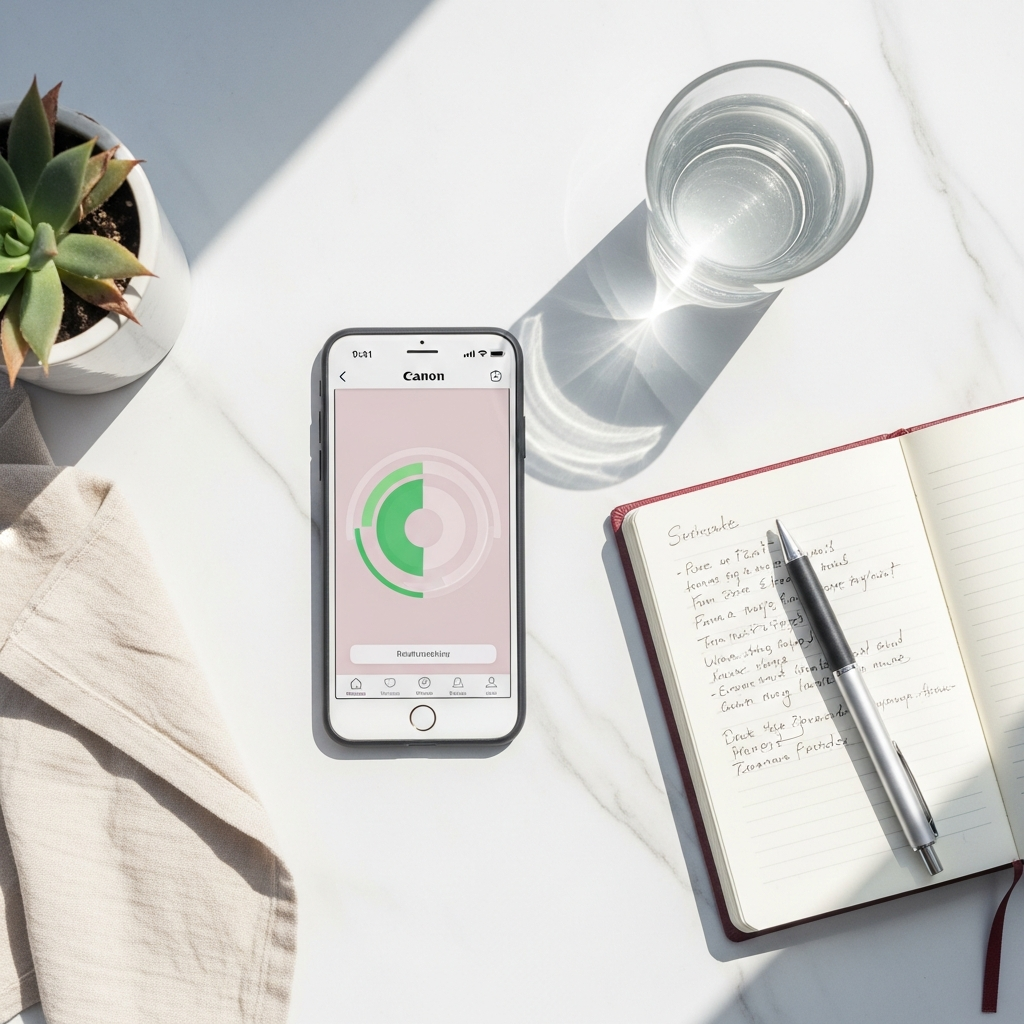
If you already wear any fitness tracker or smartwatch: Start recording your HRV, resting heart rate, sleep quality, and step count consistently. You don't need a special IBD app for this. What you're building is a personal pattern baseline — what does normal look like for your body (or your child's body) on a good week? Because when something shifts, that shift becomes visible.
Pair that data with a simple symptom log. Even just a note in your phone: energy level, any cramping, appetite, stool changes. Over weeks and months, patterns emerge.
Bring it to your GI appointment. When my son's GI saw us tracking HRV, he was genuinely curious. That's the conversation you want to open. Your gastroenterologist may not have thought about wearable data yet — you might be the one who brings this to their attention. That's not overstepping; that's being an informed advocate for your family.
Watch this space. There are apps and tools in development right now specifically targeting the gut-brain axis and IBD monitoring. I've recently been given access to one that's showing real promise — it's focused on the gut-brain connection and is currently free to trial. I'm speaking with the developers about whether I can share it with this community. If you'd like to be on that list, drop your details below and I'll reach out if they give the green light.
The realistic picture, as the Crohn's & Colitis Foundation and leading IBD researchers would agree, is that we are in an early but genuinely exciting phase of digital health monitoring for IBD. The tools are coming. The science is building. But right now, the most powerful thing you can do is track consistently, bring that data to your medical team, and stay curious without getting swept up in the hype.

## Common Questions
Can a smartwatch detect a Crohn's flare?
Not specifically — no consumer wearable currently has FDA clearance for Crohn's flare prediction. However, signals like HRV and resting heart rate have published research linking them to IBD inflammatory activity, making them worth tracking as part of a broader monitoring approach.
What is heart rate variability and why does it matter for IBD?
HRV measures the variation in time between heartbeats and reflects autonomic nervous system activity. Research shows HRV tends to be lower in IBD patients during active inflammation, making it a potentially useful proxy signal — though not a diagnostic tool.
What data should I bring to my GI appointment from my wearable?
Focus on trends over time: resting heart rate, HRV, sleep quality scores, and daily step count. Pair this with a symptom log for the most useful picture. Your GI can help interpret whether any patterns are clinically relevant.
Are there apps specifically designed for Crohn's monitoring?
A small number of apps are in development targeting IBD-specific monitoring, including gut-brain axis tracking. None have yet achieved specific FDA clearance for flare prediction. General symptom-tracking apps combined with wearable data remain the most accessible option right now.
---
This article is for informational purposes only and does not constitute medical advice. Always work with your gastroenterologist and healthcare team.