My son couldn't eat 'healthy' rice. Here's why white rice won.
# Why White Rice Works When Brown Rice Doesn't (And What That Tells Us About Eating With Crohn's)
If you or someone you love has Crohn's disease, here's the short answer: white rice works because it has had its outer bran layer removed, making it low-residue and easy for an inflamed gut to process. Brown rice retains that bran layer, which is rich in insoluble fibre — and insoluble fibre stimulates the bowel in ways that can worsen cramping, urgency, and pain during a flare. This isn't about one rice being "good" and the other "bad." It's about what an inflamed gut can actually handle right now.
Now let me tell you how I learned this the hard way.
---
My son pushed his dinner away one evening and said, quietly, "Mum, it hurts."
We'd made brown rice. I'd chosen it deliberately — more fibre, more nutrients, the "healthy" option. I was a naturopath. I should have known better. But I was also a mum who'd been told her whole life that whole grains were the goal.
That moment is when my whole approach to feeding him had to change.
## What's Actually Different Between White Rice and Brown Rice?
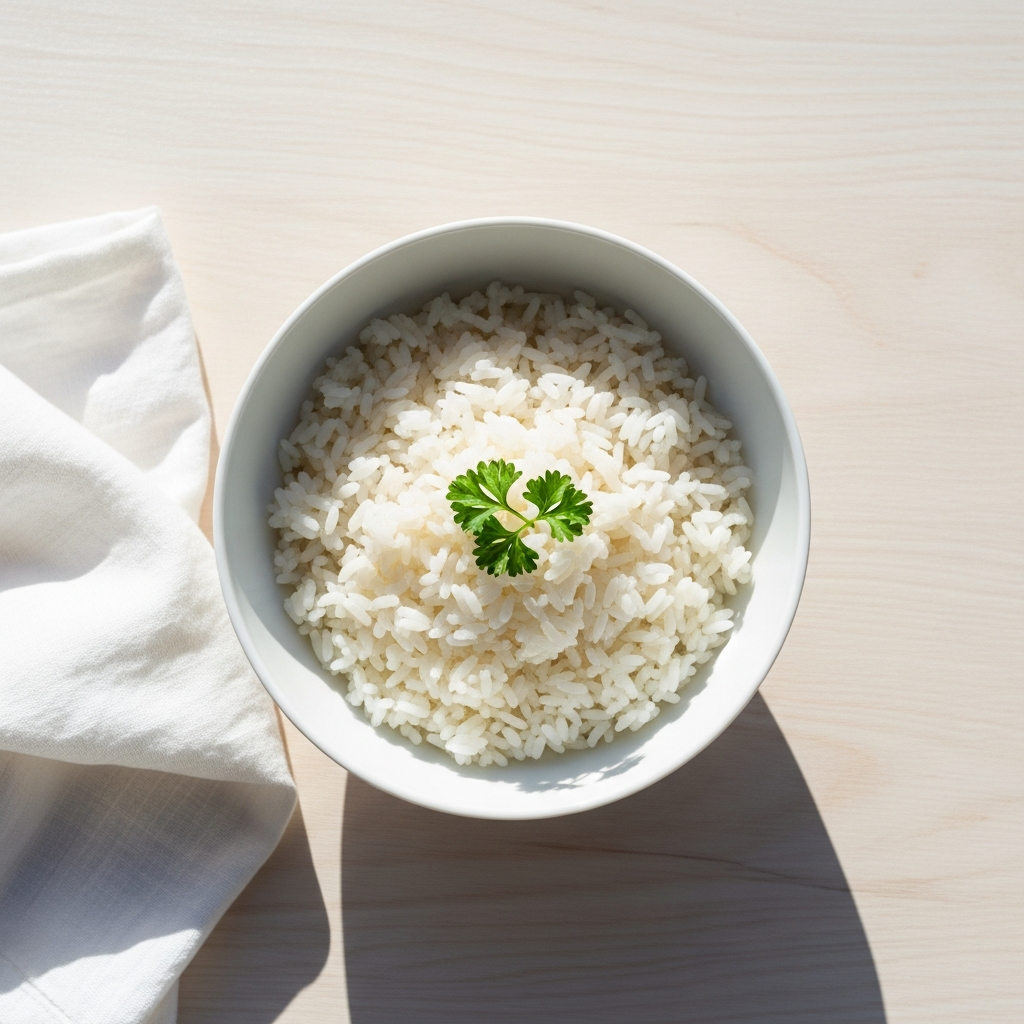
Both white and brown rice start as the same grain. The difference is processing. Brown rice is a whole grain — it retains its outer bran layer and germ. White rice has those layers milled away, leaving mostly the starchy endosperm.
For general population health, brown rice is often recommended because that bran layer contains fibre, B vitamins, and minerals. The Crohn's & Colitis Foundation and most gastroenterology guidelines acknowledge this — but they also note that during active disease or flares, a low-residue diet is often better tolerated.
Key takeaway: The fibre that makes brown rice nutritionally superior is the exact same fibre that makes it harder for an inflamed Crohn's gut to tolerate.
Insoluble fibre — the kind found in brown rice bran — does not dissolve in water. It passes through the digestive tract largely intact, adding bulk and stimulating bowel contractions. When your gut lining is healthy, this is a good thing. When it's inflamed, ulcerated, or narrowed (as it can be in Crohn's), that stimulation can trigger cramping, urgency, and increased stool frequency.
White rice, by contrast, is:
- Low in insoluble fibre — very little residue left after digestion
- Easy to digest — the starchy endosperm breaks down quickly and smoothly
- Gentle on motility — it doesn't stimulate the bowel the way high-fibre foods do
- Binding in nature — it can actually help slow loose stools during a flare
## How White Rice Became a Staple in Our Family's Safe Food Ladder
When my son was first navigating his Crohn's, we were trying to understand which foods felt safe — not just on paper, but in his actual body. White rice was one of the first things that consistently worked. He could eat it. It didn't hurt. That matters more than you know when you're watching your child be afraid of food.
My husband — who has had Crohn's for over 25 years, including three surgeries when he was younger — has always kept white rice in his regular rotation too. Even now, 20+ years into deep remission with no flares, he returns to it instinctively when his gut feels off. It's not a "sick food" in our house. It's a foundation food.
As a naturopath, I've come to think of white rice as a scaffold food — something that holds up the rest of the meal when the gut needs a break. It's not meant to be eaten plain forever. It's a starting point.
## What to Pair With White Rice (Without Triggering a Flare)
One of the most common questions I get is: "Okay, but white rice on its own isn't a meal — what do I add?"
Here's what we've found works well as part of a low-residue approach, always alongside guidance from your gastroenterologist or dietitian:
Proteins that pair well:
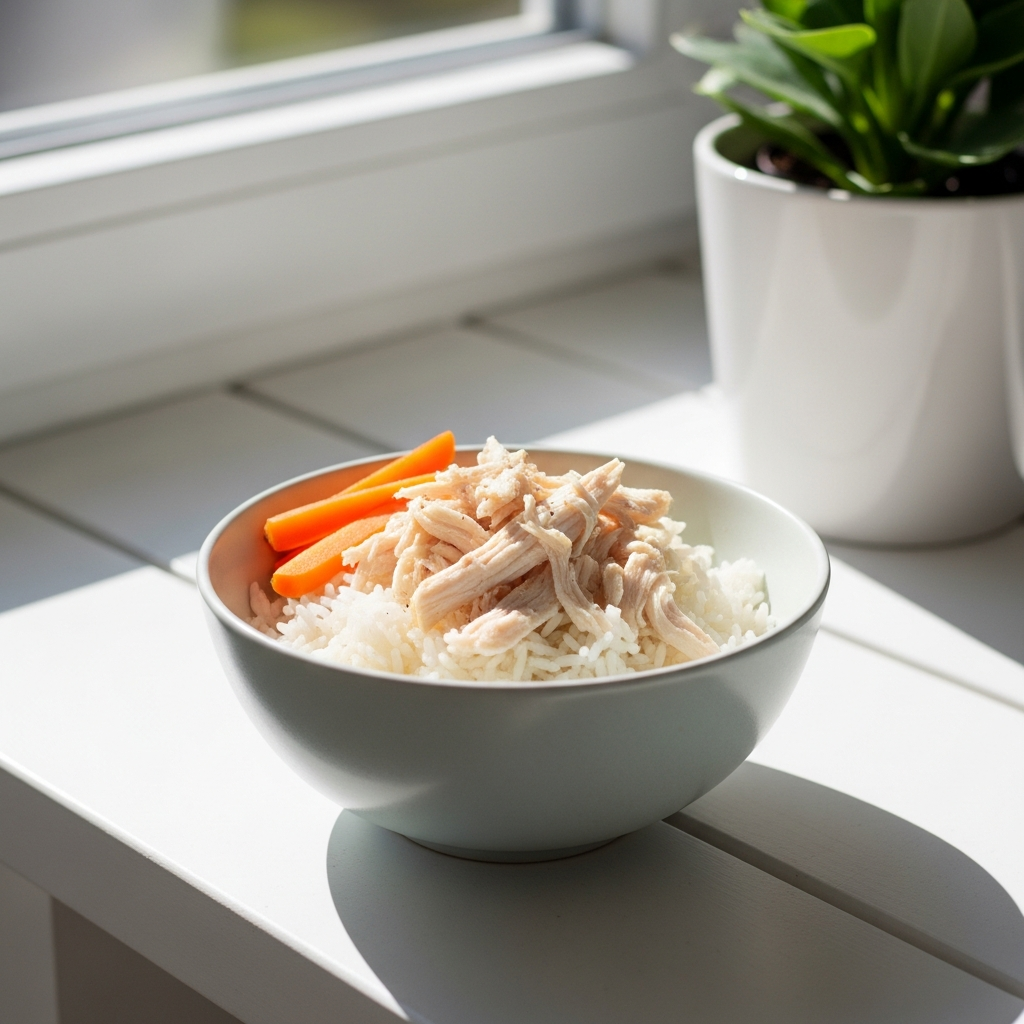
- Poached or baked chicken breast (no skin)
- White fish (barramundi, flathead, snapper) — steamed or baked
- Eggs, scrambled soft or hard-boiled
- Well-cooked tofu (for those who tolerate soy)
Vegetables that tend to be tolerated:
- Well-cooked carrots (soft, not crunchy)
- Zucchini, peeled and cooked until tender
- Peeled potato or sweet potato, mashed
- Pumpkin, steamed or roasted until very soft
What to avoid pairing with rice during a flare:
- Raw salads or raw vegetables (high insoluble fibre)
- Legumes or lentils (fermentable fibres, gas-producing)
- High-fat sauces or fried coatings
- Spicy seasonings or chilli
The goal during a flare is to reduce the work your gut has to do. White rice does that. The right pairings extend that gentleness across the whole meal.
Key takeaway: White rice is a scaffold food — it holds up the meal while your gut heals. Build around it with soft proteins and well-cooked vegetables.
## Does White Rice Have Enough Nutrition?
This is the worry I hear most often — especially from parents. "But isn't white rice nutritionally empty?"
Here's the honest naturopathic answer: white rice is not a nutritional powerhouse, but it is not nutritionally empty either. It provides:
- Easily absorbed carbohydrates for energy (critical when a person with Crohn's is struggling to eat enough)
- Small amounts of B vitamins
- Manganese and selenium
- Resistant starch when cooled after cooking (which feeds beneficial gut bacteria gently)
The concern about nutrition is real — but it applies to the long-term picture, not to the acute phase. During a flare, getting something in that doesn't cause pain is the priority. Nutritional optimisation comes when the gut has settled.
If someone is relying heavily on white rice for an extended period, this is a good time to speak with a dietitian who works with IBD patients about supplementation and gradual food reintroduction.
## When to Transition Back to Brown Rice (Or Not)
Here's something I want to say clearly: not everyone with Crohn's needs to avoid brown rice forever. Some people in deep remission tolerate it well. Others find they never do. This is highly individual.
The goal of the Safe Food Ladder approach is to start with what the gut can handle, stabilise, and then — slowly, carefully, in collaboration with your medical team — explore what else can be added back in.
For my son, brown rice is something we've tried again during remission. Sometimes it's fine. Sometimes it isn't. We don't force it. White rice is always there as the safe option.
For my husband, after 20+ years, he eats a wide variety of foods — but he still reaches for white rice when he needs something grounding and gentle. Old habits from hard years, and they've served him well.
---
## Common Questions
Q: Can I eat white rice every day if I have Crohn's?
White rice is generally well-tolerated daily during a flare, but for long-term nutrition, it's worth working with a dietitian to ensure you're meeting your broader nutrient needs.
Q: Is white rice okay during a Crohn's flare?
For many people with Crohn's, yes — white rice is a commonly recommended low-residue food during active flares. Always follow the guidance of your gastroenterologist.
Q: Does brown rice cause flares in Crohn's?
Brown rice doesn't cause Crohn's disease, but its high insoluble fibre content can aggravate symptoms during active inflammation. It's not about the rice being harmful — it's about timing and gut tolerance.
Q: What's the best rice for someone with IBD?
White rice is typically better tolerated during active disease. Well-cooked white rice, served soft, is a staple in many low-residue diet plans recommended for IBD management.
---
This article is for informational purposes and reflects Kate's personal and professional experience. It does not replace medical advice. Always work with your gastroenterologist and healthcare team.