My son gave up his morning coffee. Here's what we learned.
## The short answer\
\
Coffee is not the enemy — but during a Crohn's flare, it can make a reactive, inflamed gut significantly worse. The combination of caffeine, acids, and coffee's natural laxative compounds stimulates gut motility at exactly the wrong time. During a flare, most people do better switching to gentler alternatives until things settle. This article explains why, and what actually helped our family.\
\

\
\
## Why does coffee affect Crohn's during a flare?\
\
The morning my son pushed his coffee away mid-flare and said, "Mum, it just makes the cramping worse" — I realised I'd never fully explained the why to him. As a naturopath, I know the mechanisms. As his mum, I should have shared them sooner.\
\
Here's what's actually happening:\
\
Coffee stimulates gut motility — and it does this through multiple pathways, not just caffeine. Coffee triggers the release of gastrin and cholecystokinin, hormones that speed up movement through the digestive tract. According to the Crohn's & Colitis Foundation, increased gut motility during a flare can worsen urgency, cramping, and diarrhoea.\
\
Coffee is acidic. During a flare, the gut lining is already compromised and inflamed. The acidity of coffee can further irritate that lining, increasing discomfort and potentially worsening symptoms.\
\
Even decaf isn't off the hook. Many people assume switching to decaf solves the problem — but decaffeinated coffee still contains the acids and other bioactive compounds that stimulate the gut. For some people during a flare, decaf causes almost as much urgency as regular coffee.\
\
Key takeaway: It's not just the caffeine — it's coffee's combined effect on gut motility, acidity, and gut lining irritation that makes it a common flare trigger.\
\
## Is coffee always a problem with Crohn's?\
\
No — and this is important. Outside of a flare, many people with Crohn's tolerate coffee well. My husband, who has been in deep remission for over 20 years after three surgeries, drinks coffee regularly with no issues. My son, now also in remission, has his morning cup again.\
\
The key distinction is context. During active inflammation, the gut is hypersensitive. What's tolerable in remission may not be tolerable during a flare. This isn't a permanent goodbye to coffee — it's a temporary, strategic pause to let the gut settle.\
\
The NHS and many gastroenterology teams recommend a low-residue, low-stimulant approach during active flares, which typically includes reducing or eliminating coffee temporarily.\
\
Key takeaway: Coffee during remission and coffee during a flare are two very different conversations. Context matters enormously.\
\
\
\
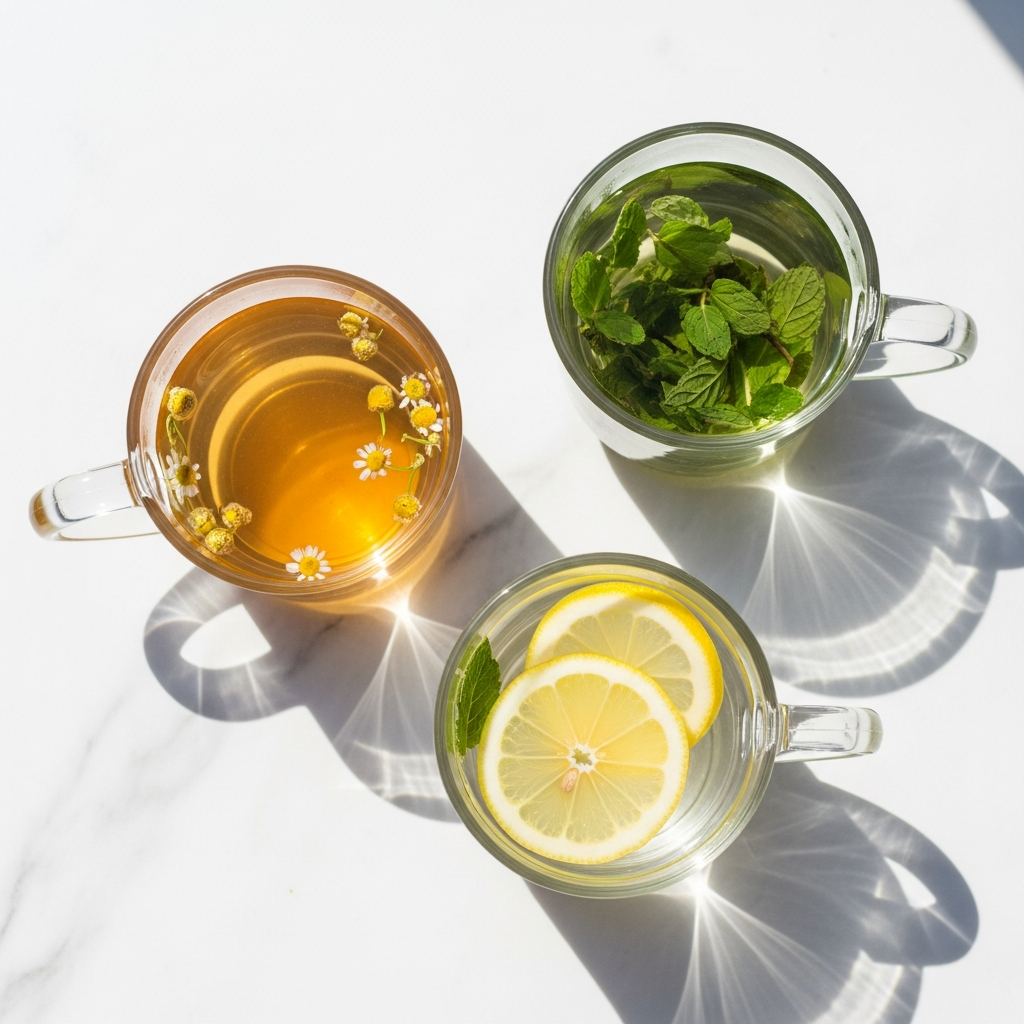
## What should you drink during a flare instead?\
\
This is where I get practical — because I've been in the kitchen with my family during bad flares, and I know that 'just drink water' isn't always enough.\
\
Here are the swaps we've actually used:\
\
1. Bone broth (warm, not hot)\
Bone broth has been one of the most consistently soothing options for our family during flares. It provides hydration, electrolytes, and easily absorbed amino acids like glycine and proline that support the gut lining. It's also warm and comforting — which matters when you're exhausted and in pain. Look for a low-sodium version, or make your own.\
\
2. Chamomile tea\
Chamomile has well-documented anti-inflammatory and antispasmodic properties. The Mayo Clinic notes that chamomile has been used traditionally to ease digestive cramping and inflammation. It's gentle, caffeine-free, and genuinely calming — both for the gut and the nervous system. During a flare, that nervous system piece matters more than people realise.\
\
3. Peppermint tea (with a caveat)\
Peppermint can ease gut spasms and reduce bloating, but it's not for everyone with IBD — particularly if you also have reflux or GERD, as it can relax the lower oesophageal sphincter. For those without reflux, weak peppermint tea during a flare can be genuinely helpful.\
\
4. Warm water with a small amount of fresh ginger\
Ginger has anti-inflammatory and anti-nausea properties that are well-supported in the research. During a flare, nausea is often a companion symptom, and a gentle ginger infusion can help settle both the gut and the stomach without stimulating motility the way coffee does.\
\
5. Electrolyte water or oral rehydration solutions\
If a flare involves frequent diarrhoea, rehydration becomes critical. Plain water doesn't replace electrolytes. A simple oral rehydration solution — or a clean electrolyte drink without artificial sweeteners — can make a real difference to energy and recovery during a bad flare.\
\
Key takeaway: The goal during a flare is to hydrate, soothe, and reduce stimulation — not just cut things out. These swaps give the gut something supportive, not just an absence of irritants.\
\

\
\
## When can you go back to coffee?\
\
This is the question my son asked me almost immediately. And the honest answer is: when your symptoms have settled and your medical team confirms you're moving out of the flare.\
\
For most people, that means waiting until urgency, cramping, and frequency have returned to your personal baseline. Then, reintroduce coffee slowly — one small cup, earlier in the day (not on an empty stomach), and see how your gut responds.\
\
My husband's approach, which he's used for over two decades: he always reintroduces coffee after food, never first thing in the morning on an empty stomach. That single change made a significant difference for him.\
\
Always loop in your gastroenterologist or IBD nurse about dietary changes during a flare — they can give you guidance specific to your current disease activity and medications.\
\
## Common questions\
\
Can I drink decaf coffee during a Crohn's flare?\
Decaf still contains the acids and gut-stimulating compounds in coffee, so it may still cause issues during a flare. Some people tolerate it better than regular coffee, but it's worth trialling cautiously rather than assuming it's safe.\
\
Is green tea okay during a Crohn's flare?\
Green tea contains less caffeine than coffee and has some anti-inflammatory properties. Many people with Crohn's tolerate weak green tea during a flare better than coffee — but individual responses vary. Start with a weak brew and monitor your symptoms.\
\
Does coffee cause Crohn's flares, or just make them worse?\
Coffee doesn't cause Crohn's flares — Crohn's is an immune-mediated condition. But during an active flare, coffee can amplify symptoms by stimulating gut motility and irritating an already inflamed gut lining.\
\
What's the single best drink during a Crohn's flare?\
There's no one-size-fits-all answer, but warm bone broth or chamomile tea are the most consistently well-tolerated options I've seen in our family and in my practice. Hydration and electrolytes are the priority — comfort is a close second.\
\
---\
\
This article supports, and does not replace, the care of your gastroenterologist or IBD team. Always discuss dietary changes during a flare with your medical team.\
\
— Kate, The Crohn's Method