My son was afraid of salad for 2 years. Here's what changed.
# Can You Eat Salad Again With Crohn's? Here's the Honest Answer
The short answer: maybe — and it depends far more on where your gut is right now than on any permanent rule. Raw vegetables are not automatically off the table forever for people with Crohn's disease. During active inflammation or a flare, high-fibre raw foods can aggravate symptoms. But in remission, many people with Crohn's tolerate salad and raw vegetables well, especially with some thoughtful preparation. Here's what I've learned — as a naturopath and as a mum who watched her son push salad to the edge of his plate for two years.
---
## Why Raw Vegetables Feel Dangerous With Crohn's
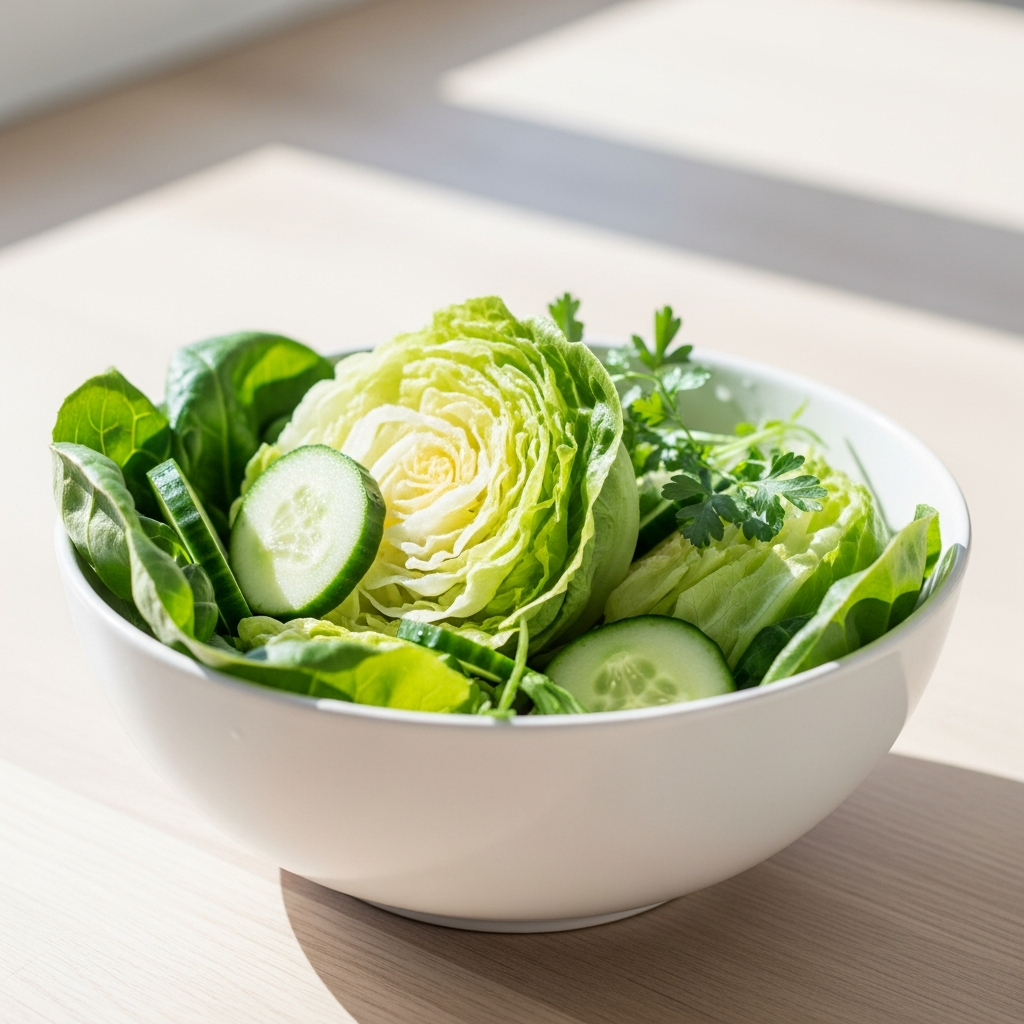
When my son was first diagnosed, the dietary advice he received was blunt: avoid raw vegetables, avoid high-fibre foods, stick to soft and cooked. And in the context of active disease, that advice made sense. During a flare, the gut lining is inflamed, sometimes narrowed, and mechanically stressed. Raw vegetables — with their intact cell walls and higher fibre content — require more digestive work. For a gut that's already struggling, that extra work can mean cramping, urgency, and pain.
The Crohn's & Colitis Foundation notes that a low-residue or low-fibre diet is often recommended during flares specifically to reduce the mechanical load on the intestine — not because fibre is inherently harmful, but because timing matters.
Key takeaway: Raw vegetables are harder to digest during active inflammation — but that's a temporary state, not a life sentence.
## What Changes in Remission
Here's what nobody told us at diagnosis: the rules change when the inflammation settles.
Once my son reached remission — confirmed by his gastroenterologist through scoping and fecal calprotectin — we started working with his care team to slowly reintroduce foods. As a naturopath, I knew that the gut microbiome actually benefits from dietary fibre, and that long-term avoidance of plant foods can reduce microbial diversity over time. Research published in journals like Gut has consistently linked higher dietary fibre intake with better gut microbiome health — and this matters for people with IBD in remission, not just the general population.
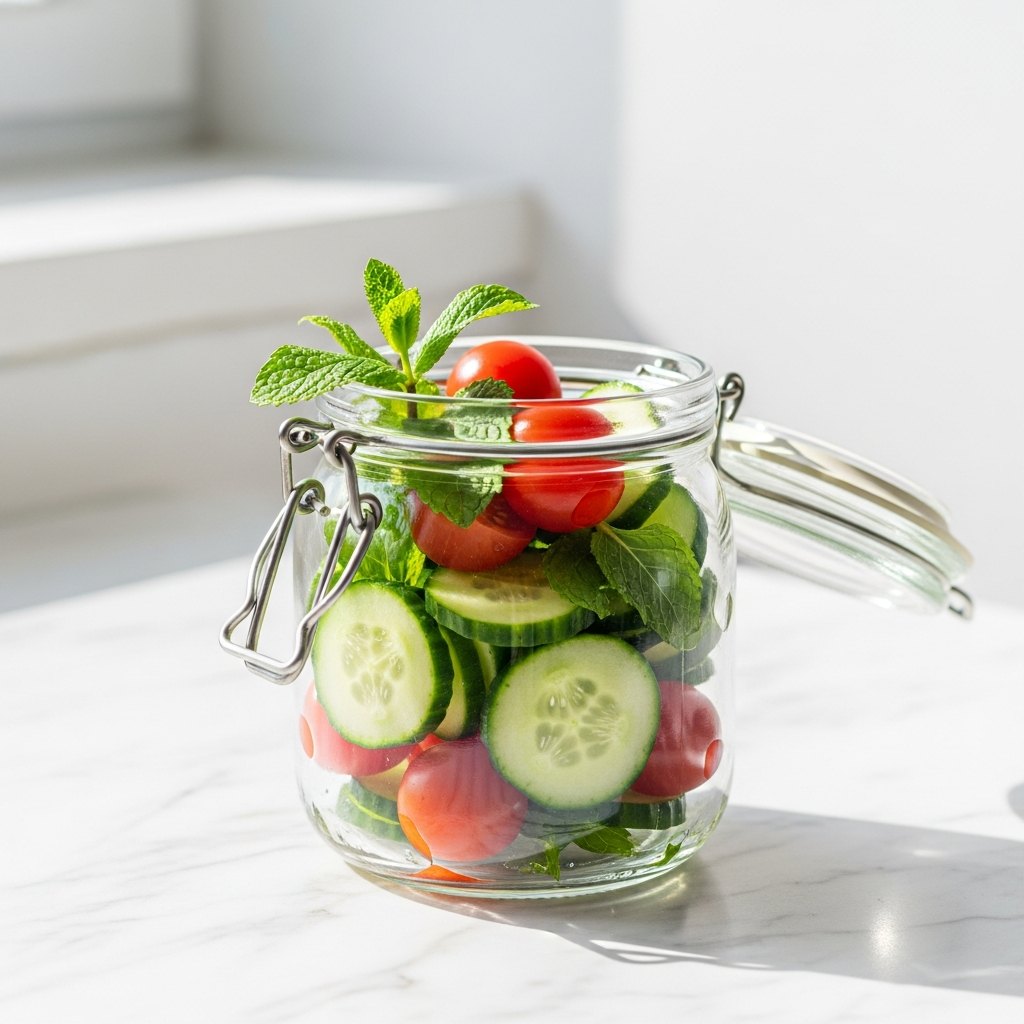
We didn't go straight to a big Caesar salad. We started with well-chewed, small amounts of softer raw vegetables — cucumber, shredded carrot, ripe tomato without the skin. We watched. We adjusted.
Today, my son eats salad. Not every day, not every type, but he eats it — and it doesn't scare him anymore.
Key takeaway: In remission, gradual reintroduction of raw vegetables — guided by your medical team — is often possible and may support gut microbiome health.
## How to Approach Salad When You Have Crohn's
This is not a prescription — it's a framework. Always work with your gastroenterologist and dietitian before making changes, especially if you're coming out of a flare.
1. Check your current disease activity first.
If your fecal calprotectin is elevated, or you're in the middle of a flare, this is not the time to experiment with raw vegetables. Wait. Let the inflammation settle.
2. Start with the easiest raw vegetables to digest.
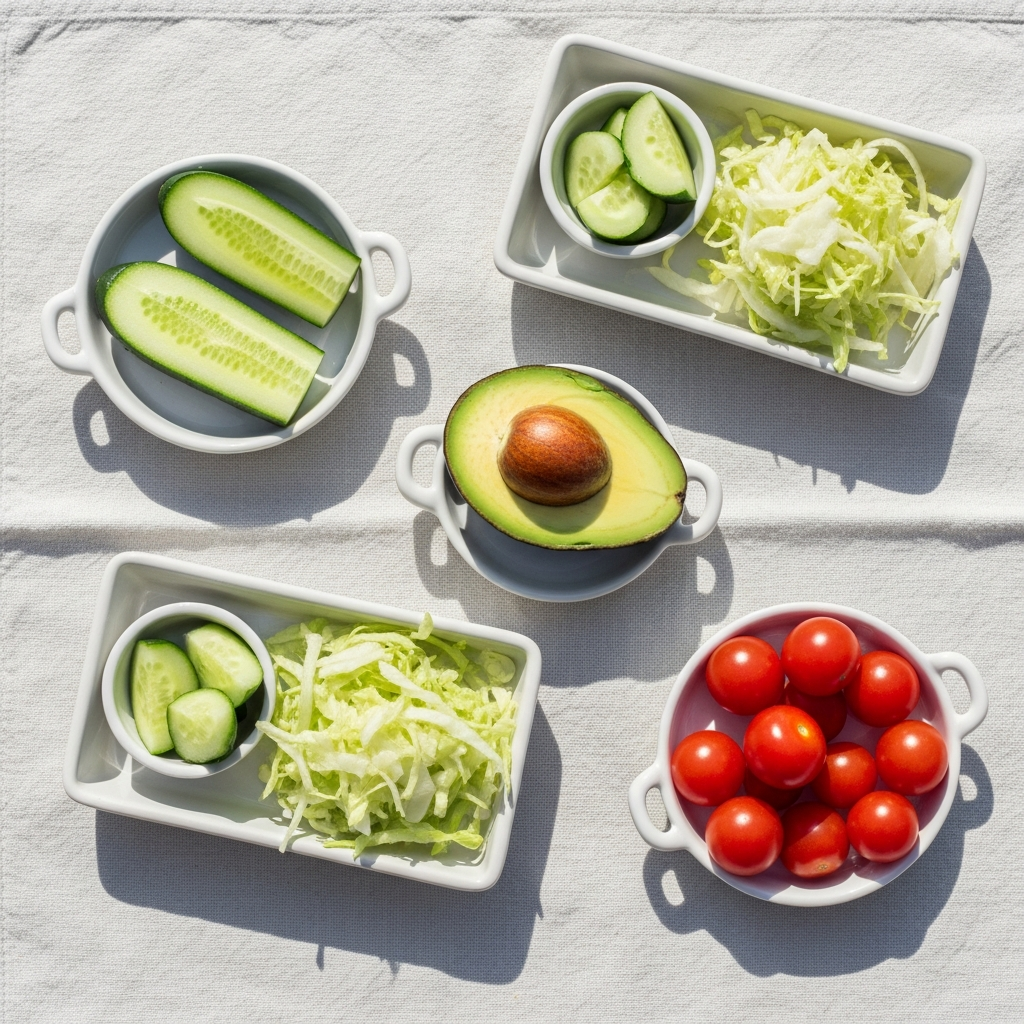
Not all raw vegetables are equal. Softer, lower-fibre options are a gentler starting point: peeled cucumber, ripe avocado, shredded iceberg lettuce, ripe tomato (peeled and deseeded). Harder, higher-fibre options — raw broccoli, raw onion, raw cabbage — are harder for most people with Crohn's to tolerate even in remission.
3. Chew thoroughly. Seriously.
This sounds basic, but it's clinically significant. Mechanical breakdown in the mouth reduces the digestive burden on the gut. Chewing each mouthful well — more than you think you need to — genuinely makes a difference.
4. Watch portion size, not just food type.
A small side salad is a very different digestive challenge from a large entrée salad. Start small. Notice how you feel 2-4 hours later, not just immediately.
5. Dressing matters more than you'd think.
Heavy cream dressings, high-fat options, or dressings with garlic and onion (high-FODMAP) can trigger symptoms independently of the vegetables. A simple olive oil and lemon dressing is usually the gentlest starting point.
Key takeaway: Preparation method, portion size, vegetable type, and current disease activity all matter more than a blanket 'yes' or 'no' on salad.
## The Food Fear Nobody Talks About
I want to say something that doesn't get said enough in the clinical setting: food fear is real, and it's one of the hardest parts of living with Crohn's.
When eating has caused you pain — or caused your child pain — it makes complete sense that food becomes something to be afraid of, not enjoyed. My son didn't just lose salad. For a period, he lost the confidence to eat freely at all. That psychological weight is heavy, and it deserves to be taken seriously.
If food fear is affecting your quality of life or your child's, please mention it to your care team. A dietitian with IBD experience, or a psychologist familiar with chronic illness, can make an enormous difference. This is not a weakness — it's a completely understandable response to a difficult experience.
---
## Common Questions
Can I eat salad during a Crohn's flare?
Generally, raw vegetables are not recommended during an active flare because they increase the mechanical load on an already-inflamed gut. A low-residue diet is typically advised during flares — speak with your gastroenterologist or dietitian for personalised guidance.
Which raw vegetables are easiest to tolerate with Crohn's?
Softer, lower-fibre options tend to be better tolerated: peeled cucumber, ripe avocado, shredded iceberg lettuce, and ripe tomato (peeled and deseeded). Hard, cruciferous raw vegetables like broccoli and cabbage are typically harder to tolerate.
How do I know if I'm ready to reintroduce raw vegetables?
The best indicator is confirmed remission — ideally assessed by your gastroenterologist using fecal calprotectin and/or endoscopy. Don't rely on symptom absence alone, as Crohn's can be active without obvious symptoms in some cases.
Does eating salad cause Crohn's flares?
Raw vegetables don't cause Crohn's flares — Crohn's is an immune-mediated condition, not caused by diet. However, certain foods can aggravate symptoms during active inflammation. Diet is a supportive tool in managing Crohn's, not the root cause or cure.
---
This article is for informational purposes only and does not constitute medical advice. Always work with your gastroenterologist and healthcare team when making changes to your diet.
— Kate, The Crohn's Method