One pot of rice. Five meals. My Sunday Crohn's kitchen ritual.
The short answer: Batch-cooking a large pot of plain white rice at the start of the week is one of the most practical, low-effort strategies for keeping gut-friendly food accessible every day — especially during flares, recovery, or high-fatigue periods. It takes about 20 minutes of active effort and gives you a safe, versatile base for five completely different meals.
Now let me tell you how we actually got here.
---
Sunday afternoons in our house used to carry a particular kind of quiet dread. My son's gut would be unpredictable. My husband — twenty-plus years in remission now, but we never take that for granted — would be tired. And I'd be standing at the stove wondering what I could make that was safe, nourishing, and wouldn't take an hour.
I'm a naturopath. I know a lot about food and the gut. But I'll be honest with you: the hardest part of feeding a family with Crohn's isn't knowing what's good for them. It's having the energy to actually make it when everything feels hard.
That's how I landed on what I now call our Sunday rice ritual.
One big pot of plain white rice. Cooked once. Used five different ways across the week.
It sounds almost too simple. But that's exactly the point.
## Why White Rice for Crohn's?
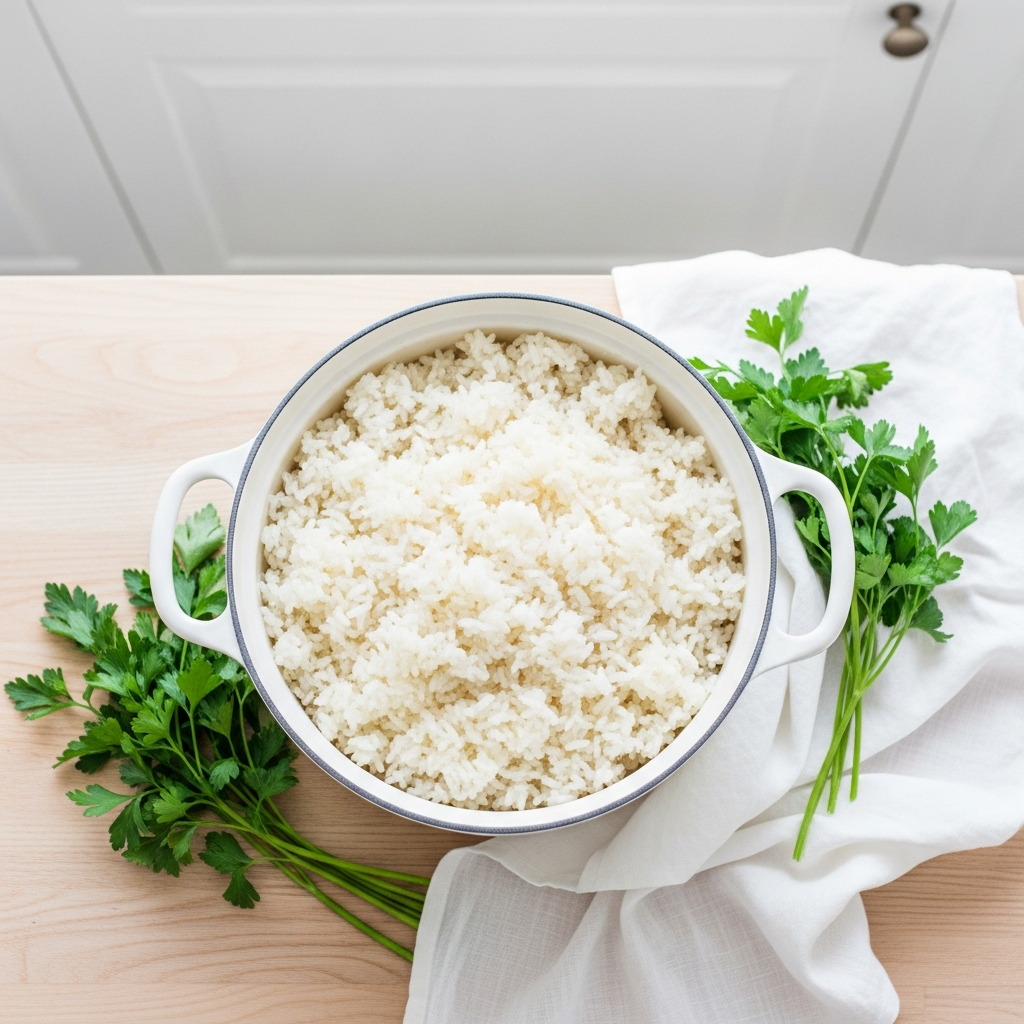
White rice is one of the most well-tolerated foods for people with IBD — particularly during and after flares. Unlike brown rice, it's low in insoluble fibre, which means it moves through an inflamed or recovering gut with far less irritation. The Crohn's & Colitis Foundation includes white rice on its list of generally well-tolerated foods for people with IBD, and it's a cornerstone of low-residue dietary approaches often recommended during active disease.
Key takeaway: White rice is low in insoluble fibre, easy to digest, and one of the most reliably tolerated foods for people managing Crohn's disease.
As a naturopath, I also value it because it's a blank canvas. It doesn't compete with therapeutic additions — bone broth, gentle herbs, easily digestible proteins — the way a heavily seasoned grain might. You can build on it depending on how someone is feeling that day.
And as a Crohn's mum? I value it because my son will actually eat it. That matters more than anything.
## How to Batch-Cook the Rice (The Method That Works)
This is not complicated, but a few details make a real difference for texture and digestibility:
What you need:
- 3 cups of white jasmine or basmati rice (serves a family of 4 for most of the week)
- A heavy-based pot with a tight-fitting lid
- Cold water — ratio of 1:1.5 (rice to water)
Method:
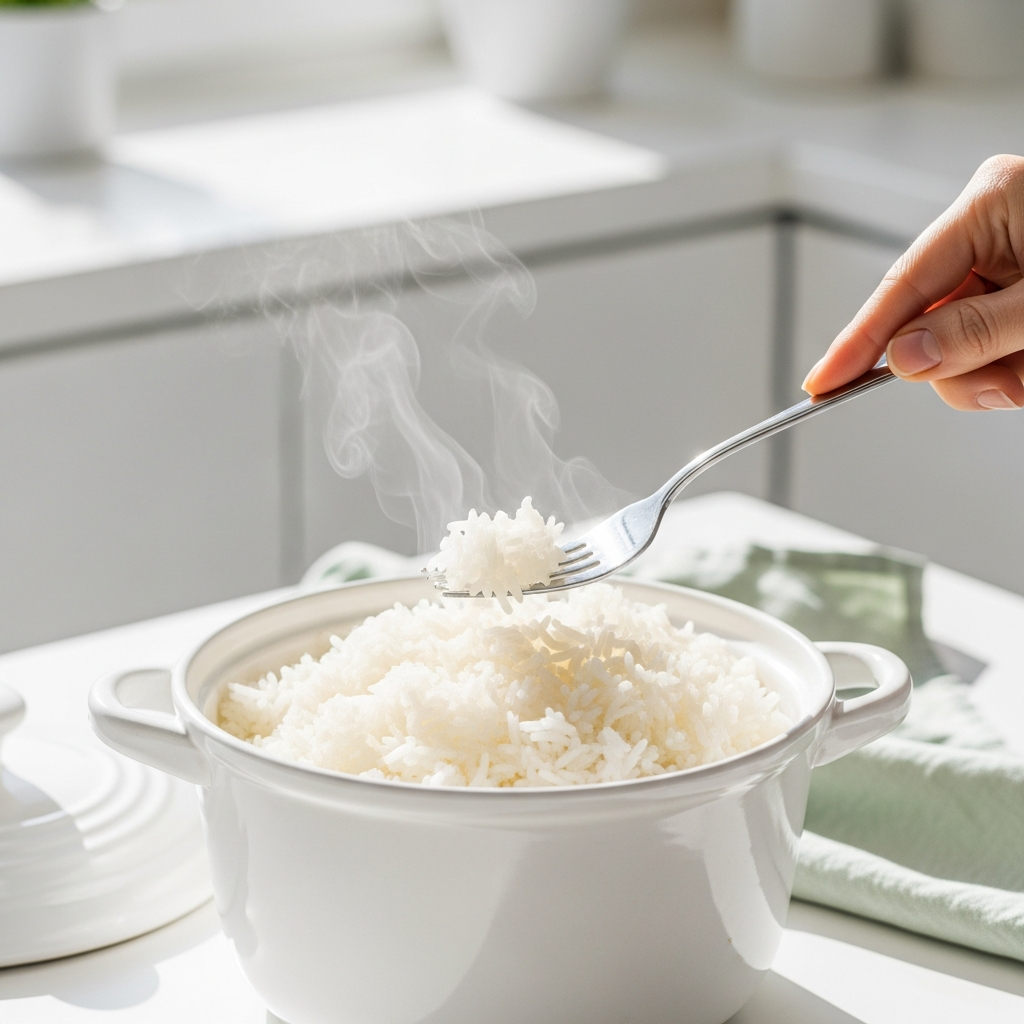
- Rinse the rice thoroughly under cold water until the water runs clear. This removes excess surface starch and prevents a gluey texture.
- Add to the pot with cold water. Bring to a boil over medium-high heat.
- Once boiling, reduce heat to the lowest setting, cover tightly, and cook for 12 minutes. Do not lift the lid.
- Remove from heat and let it steam, still covered, for 10 minutes.
- Fluff with a fork. Allow to cool completely before portioning into airtight containers.
Stored in the fridge, it keeps well for 4–5 days. Reheat with a small splash of water to restore moisture.
## 5 Ways We Use It Through the Week
Here's the part I want you to save. These are the five ways we actually use our batch-cooked rice — from the most gentle (for rough gut days) to the most nourishing (for when things are going well).
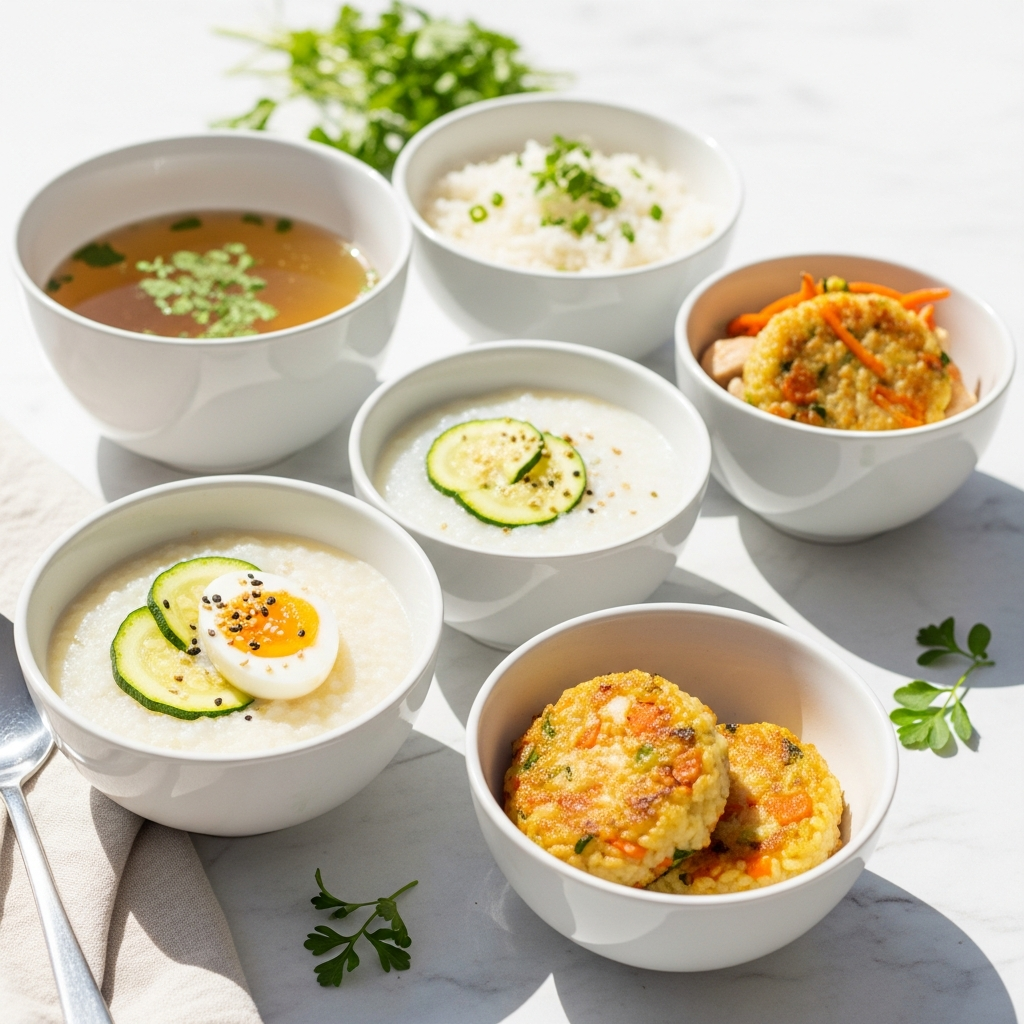
1. Simple Broth Bowl
Warm rice in a cup of good-quality bone broth — homemade if you have it, low-sodium store-bought is fine. Add a pinch of sea salt. That's it. This is my son's go-to on a bad day. It's warm, easy to digest, and genuinely comforting. The Crohn's & Colitis Foundation notes that bone broth may help support gut lining integrity, though always check with your gastroenterologist about what's appropriate for your current stage.
2. Rice with Poached Egg and Soft Zucchini
A step up in nourishment. Poached egg adds easily digestible protein. Zucchini, cooked until very soft, adds gentle nutrients without the fibre load of harder vegetables. A small drizzle of good olive oil finishes it. Simple, satisfying, and kind to an IBD gut.
3. Rice Congee (Jook)
Take a portion of rice and simmer it in extra broth or water — roughly 1 cup rice to 4 cups liquid — until it breaks down into a thick, porridge-like consistency. Season gently with ginger (anti-inflammatory and well-tolerated by most) and a few drops of tamari. Congee has been used across Asian cultures for centuries as a healing food, and it's particularly useful during flares when even normal rice texture feels like too much.
4. Rice with Gentle Chicken and Carrot
Slow-cooked or poached chicken thigh (the fat content makes it more tender and easier to digest than breast), shredded, served over rice with carrots cooked until completely soft. This is a full meal. It's what I make when my son is doing well and needs to rebuild after a difficult stretch. Easy on the gut, genuinely nourishing.
5. Rice Patties (Pan-Fried)
At the end of the week, leftover rice gets mixed with a beaten egg and a little salt, formed into small patties, and pan-fried in a little olive oil until golden. My son loves these. They're crispy outside, soft inside, and feel like a treat rather than a safe food. Serve with a small amount of well-cooked vegetable on the side.
## A Note on Reheating Rice Safely
Food safety matters here. The NHS advises that cooked rice should be cooled quickly (within one hour), stored in the fridge, and eaten within one to two days — though many food safety guidelines extend this to four to five days when stored correctly in airtight containers at or below 5°C. The key risks come from leaving rice at room temperature for extended periods. When reheating, ensure it's piping hot all the way through. I reheat ours in a small saucepan with a splash of water or broth — it takes two minutes and restores the texture beautifully.
## Why This Matters Beyond the Recipe
I want to say something that goes beyond the five bowls.
When my husband was going through his third surgery — years before I had the knowledge I have now — we had no framework for this. No plan. Just fear and exhaustion and trying to figure out what he could eat day by day. It was reactive, not proactive.
What I've learned, both as a naturopath and as someone who has lived this alongside two people I love, is that the most powerful thing you can do for a Crohn's household is reduce the daily decision load. Not every meal needs to be perfectly optimised. But having one safe, reliable base already cooked? That one thing can take the panic out of a bad day.
This is what the Crohn's Kitchen series is about. Not complicated protocols. Not miracle foods. Just practical, real strategies that support your medical care and make daily life a little more manageable.
Always work alongside your gastroenterologist and healthcare team — they know your specific situation, and what works for one person may need to be adapted for another.
---
## Common Questions
Is white rice better than brown rice for Crohn's?
For most people with active Crohn's or during recovery, yes. White rice is lower in insoluble fibre, which is easier on an inflamed gut. Brown rice has more nutrients but also more roughage, which can aggravate symptoms. Your dietitian or gastroenterologist can advise on what's right for your current stage.
Can I freeze batch-cooked rice?
Yes. Portion it into zip-lock bags or airtight containers, freeze flat, and reheat from frozen in a saucepan with a splash of water. Frozen rice keeps well for up to one month.
How much rice should someone with Crohn's eat per day?
This varies depending on the individual, their current disease activity, and their overall dietary plan. There's no universal answer — work with your gastroenterologist or dietitian to find what portion sizes feel right for you.
Is congee easier to digest than regular rice?
Generally, yes. The extended cooking time breaks down the starch further, making congee particularly gentle on the gut. Many gastroenterologists and dietitians recommend it during flares or post-surgery recovery as a transitional food.