She went plant-based. Then she couldn't leave the house.
The short answer: "Eat more vegetables" is standard nutrition advice — but during active Crohn's disease, high insoluble fibre foods like raw carrots, broccoli, and apple skins can increase the risk of bowel obstruction, particularly when strictures are present. Eating well with Crohn's is a completely different discipline to general healthy eating, and it requires guidance tailored to your current disease state.
Now let me tell you about the client who came into my clinic last month.
She sat down across from me, genuinely proud. She'd gone plant-based. She was eating salads, raw vegetables, whole fruits. By every mainstream measure, she was doing everything right.
Then I looked at her symptom diary.
Daily pain. Bloating so severe she'd stopped making plans. A fear of leaving the house that had quietly swallowed her social life whole.
She wasn't doing everything wrong. She was following advice that was never designed for her body.
## Why does 'eat more vegetables' hurt people with Crohn's?
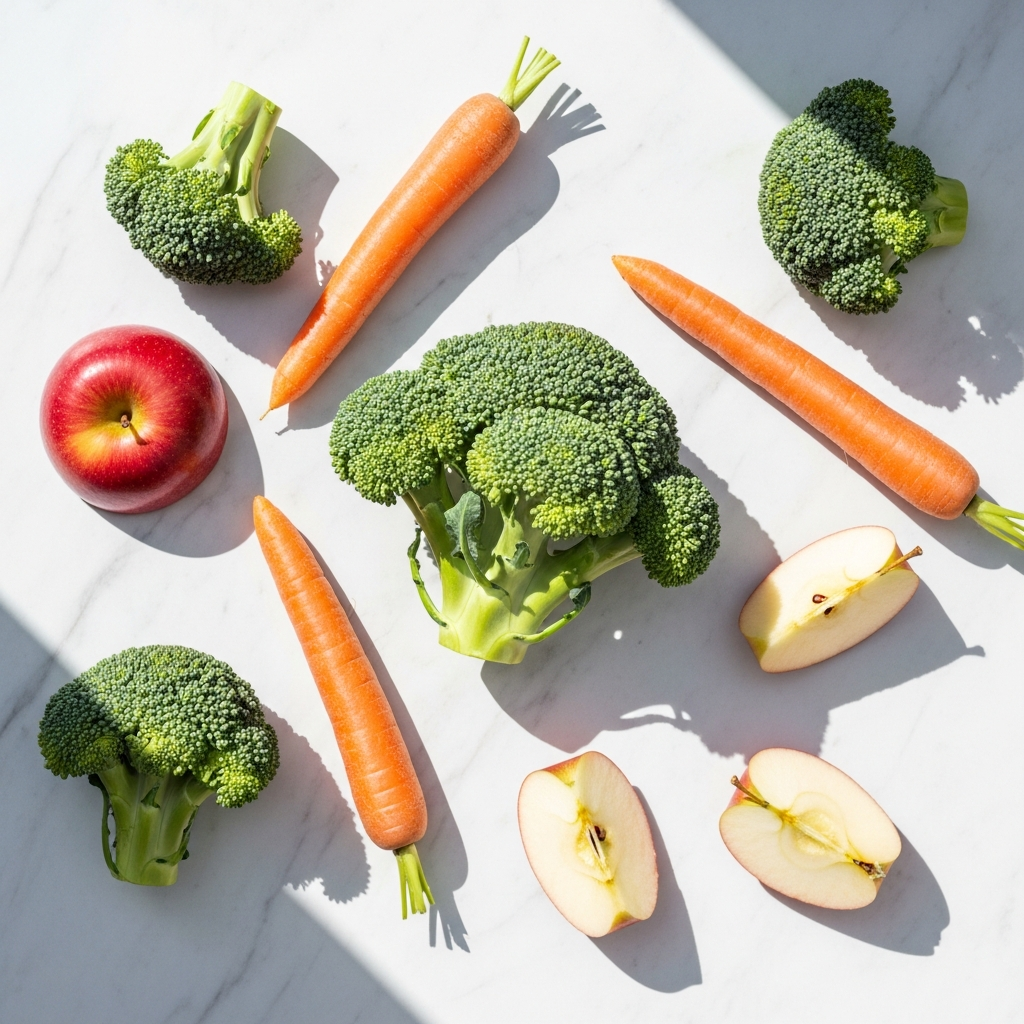
The research is clear on this. High insoluble fibre during active Crohn's disease increases bowel obstruction risk — and this risk is significantly elevated when strictures are present.
Insoluble fibre is the tough, structural part of plant foods. It doesn't dissolve in water. It doesn't soften much during digestion. In a healthy colon with good motility and no narrowing, it moves through without incident.
But a Crohn's colon is not that colon.
Inflammation causes swelling. Repeated inflammation causes scarring. Scarring causes strictures — narrowed sections of the bowel. And when you send a handful of raw carrot sticks, broccoli florets, or apple skins through a narrowed bowel, you are not "being healthy." You are creating a potential blockage.
Key takeaway: Insoluble fibre foods that are harmless for most people can physically obstruct a bowel affected by Crohn's strictures — this is a medical emergency, not a minor symptom.
The Crohn's & Colitis Foundation specifically notes that people with stricturing Crohn's disease are often advised to follow a low-fibre or low-residue diet to reduce obstruction risk. This isn't fringe naturopathic thinking — it's standard gastroenterology guidance that somehow gets lost in translation when the general "eat your vegetables" message reaches the Crohn's community.
## Why does this advice keep getting given?
Because the mainstream nutrition message was built for a healthy colon.
Public health campaigns about vegetables, fibre, and plant-based eating are designed for the general population — people whose bowels are not inflamed, not scarred, not narrowed. The advice is genuinely good for that group.
But Crohn's disease is not a general-population condition. It is a specific, complex, fluctuating disease that changes what your body can tolerate from week to week, let alone year to year.
As a naturopath, I work alongside my clients' gastroenterology teams — never instead of them. And one of the most consistent things I see is the guilt that comes from following general health advice and getting sicker. People blame themselves. They think they're failing. They're not. They were given the wrong map.
## What does eating well with Crohn's actually look like?
This is where it gets nuanced — and individual. Because what you can tolerate depends on:
- Your current disease activity (active flare vs. remission)
- Whether you have strictures (confirmed by imaging, not guesswork)
- Your personal trigger foods (which are genuinely different for everyone)
- What your gastroenterologist and dietitian have advised for your specific case
During active disease or a flare, many people with Crohn's do better with:
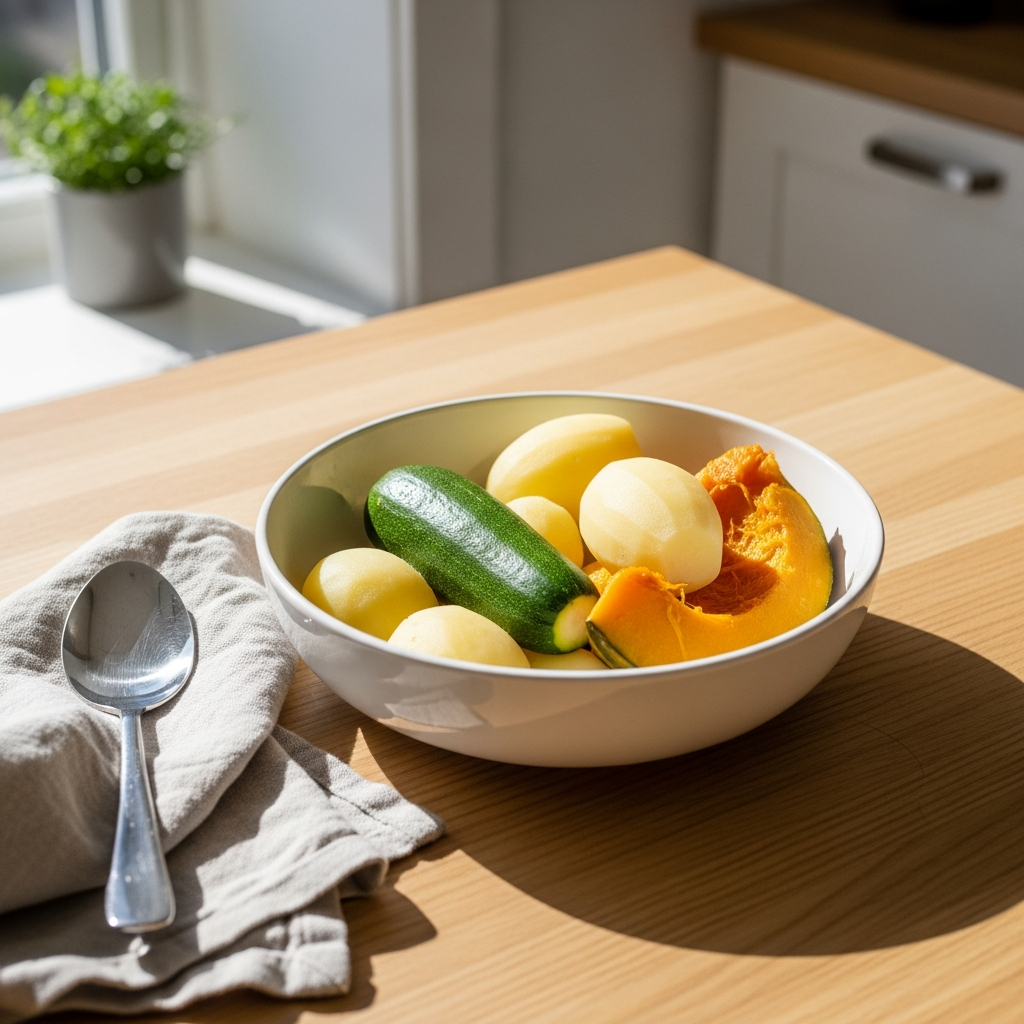
- Well-cooked, peeled vegetables — the cooking process breaks down insoluble fibre significantly
- Low-residue options — white rice, peeled potatoes, cooked carrots (not raw), zucchini
- Smaller, more frequent meals — less volume through the bowel at once
- Adequate hydration — especially important if output is high
During remission, the picture often changes. Some people reintroduce more variety. Some find they tolerate certain raw vegetables fine. Some don't. This is where working with a professional who understands Crohn's specifically — not just general gut health — makes a real difference.
Key takeaway: Eating well with Crohn's is a completely different discipline to general healthy eating — and it changes depending on your current disease state.
My son has Crohn's. My husband has Crohn's — he had three surgeries when he was younger and has now been in deep remission for over 20 years. What I've learned across both of their journeys, and in my naturopathic practice, is that the people who do best are the ones who stop trying to follow general health advice and start learning what their specific body needs right now.
That takes time. It takes professional support. And it starts with giving yourself permission to stop following advice that was never meant for you.

## This is a completely different discipline — and not a lesser one
I want to say this clearly, because I see the shame that comes with it.
When you can't eat what everyone else calls "healthy," it can feel like failure. Like you're doing something wrong. Like you should just try harder.
You're not failing. You're navigating a complex, chronic condition with a body that has different needs. That's not weakness — that's just the reality of Crohn's disease.
Eating well with Crohn's requires more knowledge, more attention, and more personalisation than general healthy eating. It is not a lesser discipline. It is a more sophisticated one.
And you deserve guidance that actually fits your body.
---
Any dietary changes during active Crohn's disease should be discussed with your gastroenterologist and dietitian first. This newsletter supports your medical care — it does not replace it.
## Common questions
Can I eat vegetables if I have Crohn's disease?
Yes — but the type, preparation, and your current disease state all matter. Well-cooked, peeled vegetables are generally better tolerated during active disease than raw, high-fibre options. Always discuss significant dietary changes with your gastroenterologist.
Why does healthy food make my Crohn's worse?
Many "healthy" foods are high in insoluble fibre, which can be difficult to move through an inflamed or narrowed bowel. This doesn't mean you're doing anything wrong — it means standard nutrition advice wasn't designed for Crohn's.
What vegetables are safe during a Crohn's flare?
Well-cooked, peeled, low-residue vegetables — such as zucchini, peeled potato, and cooked carrots — are often better tolerated. Raw vegetables, cruciferous vegetables like broccoli, and anything with tough skins are commonly problematic during active disease. Your medical team can guide you based on your specific situation.
Is a plant-based diet bad for Crohn's?
Not necessarily — but a plant-based diet high in raw vegetables and insoluble fibre can be problematic during active disease or if strictures are present. The key is working with professionals who understand Crohn's specifically, not applying general plant-based eating principles to a Crohn's bowel.