The first 24 hours of a flare — here's the plan
## The short answer
If you suspect a Crohn's flare is starting, the most important thing you can do in the first 24 hours is this: simplify your food, hydrate with electrolytes, rest without guilt, start a symptom log, and contact your GI team if there are any red-flag symptoms. You don't need to wait until it's a full crisis. Acting early — calmly and deliberately — is one of the most powerful things a person with Crohn's (or someone caring for them) can do.
---
I know that feeling. The moment my son would go quiet at dinner. The way my husband's posture would shift slightly — nothing dramatic, just a subtle pulling inward. Years of living alongside Crohn's teaches you to read the early signals before they become a storm.
And every single time, I'd think: what do we do right now, in this moment, before we know how bad it's going to get?
After years as a naturopath and a Crohn's family carer, I've built a first-24-hours plan that I come back to again and again. It's not about panicking. It's not about overriding your medical team. It's about giving the body the best possible environment to stabilise — while you stay in close contact with your gastroenterologist.
Here's what that looks like.
## What does a Crohn's flare actually feel like at the start?
A flare doesn't always announce itself with a dramatic symptom. For many people — and this was true for both my husband and my son — the early signs are subtle: a dull cramping that feels different from normal digestion, a shift in urgency, unusual fatigue, or just a general sense that something is off.
The Crohn's & Colitis Foundation notes that flare symptoms can include increased bowel frequency, abdominal pain, blood in stool, fatigue, and reduced appetite. But in the very early hours, you might only notice one or two of these at a low level.
Key takeaway: Trust your body. If something feels like the beginning of a flare, treat it as one — early action is always better than waiting.
---
## Step 1: Simplify your food immediately
This is the first thing I do, every time.
When inflammation is rising in the gut, the digestive system is working overtime. The last thing it needs is hard-to-digest fibre, raw vegetables, or rich, fatty foods. As a naturopath, I always recommend shifting immediately to a low-residue approach — not because food causes a flare, but because simplifying what the gut has to process gives it breathing room.
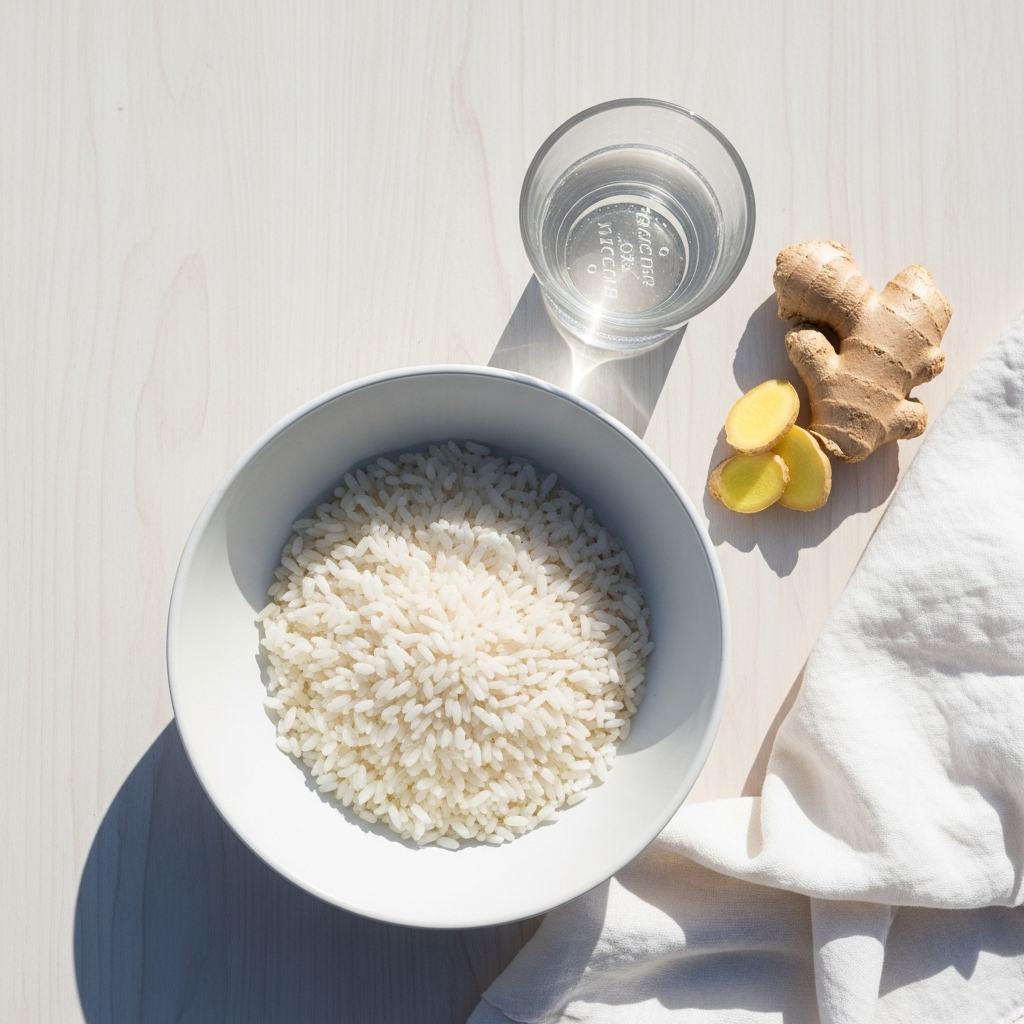
Think: white rice, well-cooked vegetables, plain chicken or fish, bone broth, ripe banana, white bread or plain crackers. Small portions. Warm rather than cold. Nothing spicy, nothing raw, nothing high in insoluble fibre.
This isn't a long-term diet — it's a short-term act of kindness toward an inflamed gut. Always discuss dietary changes with your gastroenterologist or dietitian, especially if you're on a specific nutrition plan.
---
## Step 2: Hydrate — but smarter than just water
Diarrhoea and increased bowel frequency deplete more than just fluid. They strip electrolytes — sodium, potassium, magnesium — and this is one of the most underappreciated drivers of flare-related fatigue and weakness.
Plain water, while important, doesn't replace electrolytes. I always recommend an oral rehydration solution or an electrolyte sachet alongside water during the early hours of a suspected flare. Coconut water can also help. Avoid sugary sports drinks, which can aggravate gut symptoms.
Key takeaway: Hydration during a flare means electrolytes, not just water — the gut loses far more than fluid.

## Step 3: Rest — without guilt
I cannot say this enough, and I say it as both a naturopath and someone who has watched her family fight this disease: resting during a suspected flare is not giving up. It is not weakness. It is biology.
When the immune system is activated — as it is during an IBD flare — the body diverts enormous energy toward the inflammatory response. Physical activity, stress, and poor sleep all compete with that process. Prioritising rest in the first 24 hours is one of the most clinically sensible things you can do.
For my husband, learning to rest early — before the flare peaked — was one of the things that changed his trajectory. For years he pushed through. Once he stopped, his recovery windows shortened significantly.
This means: cancel what you can, sleep as much as possible, reduce screen time and stress inputs, and let the people around you help.
---
## Step 4: Start your symptom log NOW
This is the step most people skip — and it's the one your GI team will be most grateful for.
When you contact your gastroenterologist (and you should, if symptoms persist or worsen), they'll want to know: When did it start? How many bowel movements? Any blood? Pain level? Fever? What have you eaten?
Start logging from the moment you suspect a flare. Use your phone's notes app, a piece of paper, whatever is easiest. Track: time, symptoms, food and fluid intake, pain level (1-10), and any medications taken.
Key takeaway: A symptom log started in the first 24 hours gives your medical team the clearest picture — and gets you better care faster.
---
## When to call your GI team immediately
This plan is for the early, uncertain phase of a suspected flare. There are symptoms that require immediate medical attention — do not wait.
Contact your gastroenterologist or go to emergency if you experience:
- Blood in stool (more than a small trace)
- Fever above 38°C / 100.4°F
- Severe abdominal pain that doesn't ease
- Vomiting that prevents you from keeping fluids down
- Signs of dehydration (dizziness, dark urine, rapid heartbeat)
My husband's three surgeries taught our family one thing above all else: don't delay when the red flags appear. Everything in this article supports your medical care — it does not replace it.

## Putting it all together: your first-24-hours plan
Here's the simple version:
- **Simplify food** — low-residue, warm, small portions
- **Hydrate with electrolytes** — not just water
- **Rest without guilt** — your immune system needs the energy
- **Start your symptom log** — time, symptoms, food, pain level
- **Contact your GI team** — especially if red-flag symptoms appear
You're not overreacting. You're not doing anything wrong. You're doing exactly what a prepared, informed person does — you're giving your body and your medical team the best possible starting point.
---
## Common questions
Should I stop eating completely during a flare?
No. Complete fasting is not recommended unless advised by your medical team. Shifting to low-residue, easy-to-digest foods gives the gut rest without depriving the body of nutrition.
Is it okay to take pain relief in the first 24 hours?
Speak to your gastroenterologist before taking any pain relief. NSAIDs (like ibuprofen) are generally not recommended for people with IBD as they can worsen gut inflammation. Your GI team can advise on safe options.
How do I know if it's a flare or just a bad day?
If symptoms last more than 24-48 hours, are more intense than usual, or include any red-flag signs (blood, fever, severe pain), treat it as a flare and contact your medical team. When in doubt, log and call.
Can stress trigger a flare?
The relationship between stress and IBD is well-documented — the Crohn's & Colitis Foundation acknowledges that while stress doesn't cause Crohn's, it can trigger or worsen symptoms. Managing stress inputs in the first 24 hours is a meaningful part of the plan.
---
This article is for informational purposes and supports, but does not replace, the care of your gastroenterologist or medical team.
— Kate, The Crohn's Method