The Saturday kitchen panic — and what I cook now
# The Saturday Kitchen Panic — And What I Cook Now\
\
When a Crohn's flare hits on a Saturday morning, the kitchen can feel like the most overwhelming room in the house. The short answer to \"what should I cook?\" is this: low-fibre, low-fat, soft-textured foods that are easy to digest and gentle on an inflamed gut. Think white rice, well-cooked vegetables, bone broth, and lean protein. But let me tell you how I actually got here — because the science only became useful once I'd lived through the panic first.\
\
---\
\
## Why Saturday Mornings Were the Hardest\
\
There's something about weekends that makes a flare hit differently. The routine drops away. The school run or the work schedule that normally carries you through the week is gone — and suddenly you're just... there, in the kitchen, staring at food you're not sure is safe.\
\
I remember one Saturday morning when my son was mid-flare. He was curled up on the couch, pale and exhausted. I opened the fridge and felt completely frozen. I'm a naturopath. I had the training. But in that moment, the gap between knowing the science and knowing what to put in a bowl for a sick child felt enormous.\
\
That morning changed how I think about our kitchen.\
\
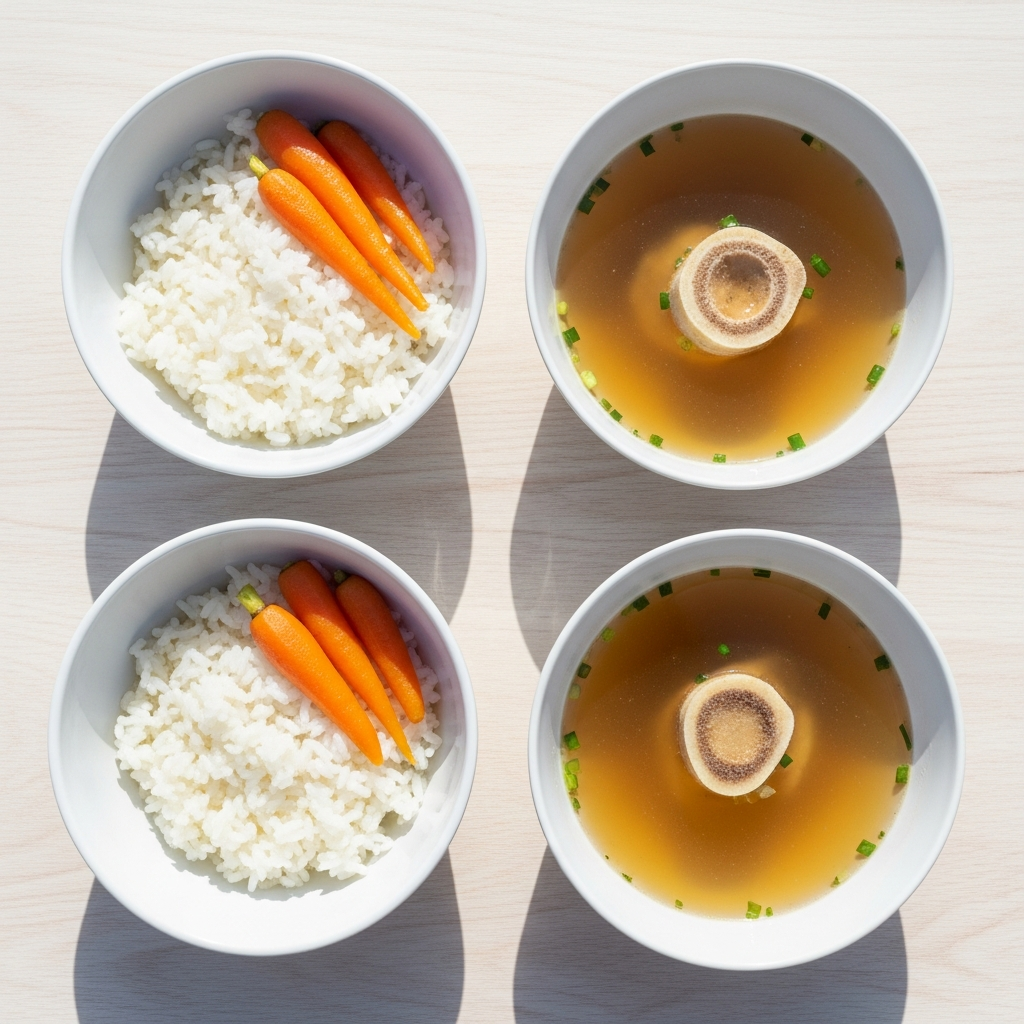
I stopped waiting for flares to figure out what to cook. I started building what I now call our Saturday Kitchen Rhythm — a small rotation of gut-gentle meals that are always ready to go, no panic required.\
\
\
\
---\
\
## What Does \"Gut-Gentle\" Actually Mean?\
\
This is a question I get asked constantly, so let me be clear about what I mean — and what the evidence actually supports.\
\
During a Crohn's flare, the goal of food is to reduce the workload on the gut while still providing nourishment. The Crohn's & Colitis Foundation recommends a low-residue, low-fibre approach during active inflammation — this means avoiding raw vegetables, high-fibre grains, seeds, nuts, and high-fat foods, which can all speed transit and worsen cramping and urgency.\
\
Key takeaway: Gut-gentle food during a flare isn't about restriction for its own sake — it's about giving the bowel a chance to rest while keeping the body nourished.\
\
For our family, that translated into three meals we keep in constant rotation:\
\
### Meal 1: White Rice with Soft-Cooked Zucchini and Bone Broth\
\
This is the meal I made that Saturday morning, and it's still the one my son asks for first when he's not feeling well. White rice is low in fibre and easy to digest. Zucchini, peeled and cooked until very soft, adds a little nutrition without the roughage. Bone broth — ideally homemade or a low-sodium store variety — adds minerals and is deeply soothing to an inflamed gut lining.\
\
As a naturopath, I appreciate that bone broth contains glycine and glutamine, amino acids that support the gut lining. That said, I always frame this as supportive to medical care — not a replacement for it. Always loop in your gastroenterologist about your flare management plan.\
\
### Meal 2: Steamed White Fish with Mashed Potato (No Skin)\
\
Protein is critical during a flare — the gut is under enormous stress and the body needs building blocks to repair. But high-fat meats are hard on the digestive system. Steamed white fish (like barramundi, cod, or tilapia) is lean, soft, and very easy to digest. Mashed potato — no skin, no butter, just a little olive oil or a splash of lactose-free milk — gives energy without fibre load.\
\
This one became a staple for my husband too, especially in the early years after his surgeries. He's now 20+ years in deep remission with zero flares, and I genuinely believe that learning to eat for his gut's current state rather than his ideal state made a difference alongside his medical treatment.\
\
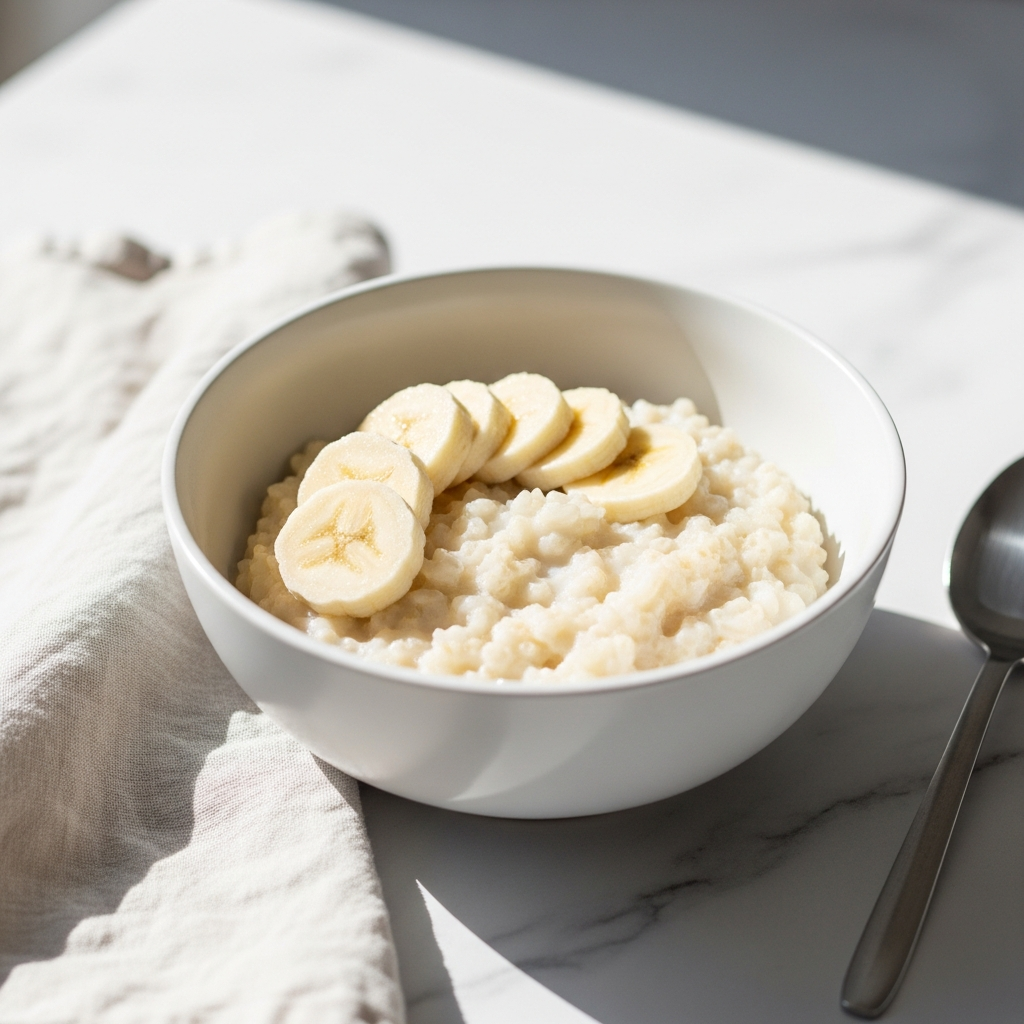
### Meal 3: Banana and Rice Porridge (for the mornings)\
\
Breakfast is often the hardest meal during a flare. My son found that anything too heavy first thing would set off cramping within the hour. This simple porridge — white rice cooked down with water until it's almost pudding-like, topped with mashed ripe banana — is gentle, slightly sweet, and actually quite filling.\
\
Ripe banana is low in fibre relative to most fruits, and the natural sugars are easy to absorb. It's not glamorous. But it works.\
\
\
\
---\
\
## Building a Saturday Kitchen Rhythm\
\
Here's the practical shift that made the biggest difference for our family: I stopped treating flare food as emergency food.\
\
When flare food is something you only think about during a flare, you're already behind. You're tired, your child or partner is unwell, and the last thing you want to do is research safe recipes.\
\
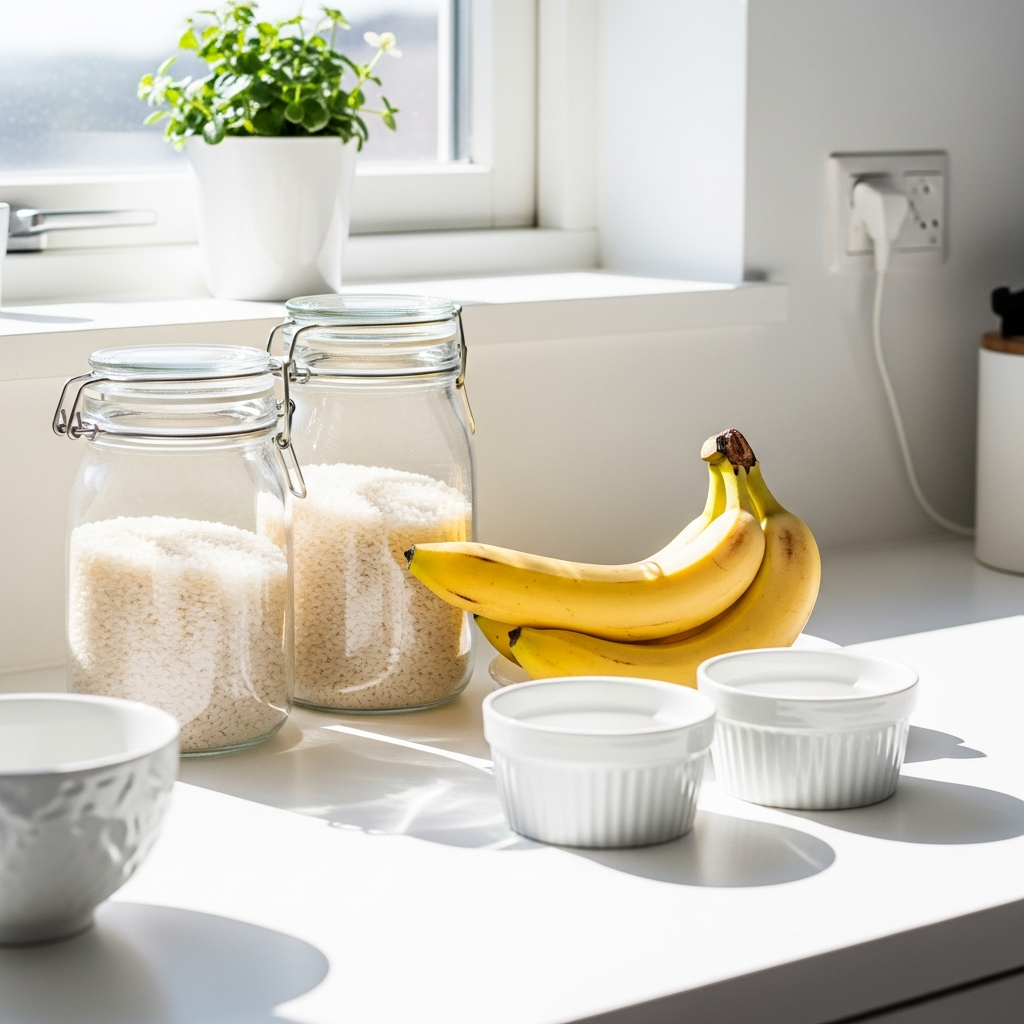
Instead, I keep the basics stocked always:\
- White rice (in bulk)\
- Canned or fresh white fish\
- Zucchini and peeled potatoes\
- Ripe bananas\
- Bone broth (a few cartons in the pantry)\
- Lactose-free milk\
\
On a good week, I batch-cook a pot of rice and a batch of mashed potato. They live in the fridge, ready to go. When a flare hits — and with Crohn's, it's never if, it's when — we're not starting from zero.\
\
This is what I mean by the Saturday Kitchen Rhythm. It's not a diet plan. It's a mindset shift: the kitchen should feel like a safe place, even on the hard days.\
\
\
\
---\
\
## A Note on Nutrition During a Flare\
\
I want to be honest about something: eating only low-fibre, soft foods for an extended period has nutritional trade-offs. The Crohn's & Colitis Foundation and many gastroenterology teams note that prolonged flares can lead to deficiencies — particularly in iron, B12, vitamin D, and zinc.\
\
As a naturopath, I always recommend that families track how long a restrictive eating pattern has been in place and raise it with their gastro team. If your child or partner has been in a flare for more than a few days, it's worth a conversation about whether supplementation or nutritional support is needed alongside their medical treatment.\
\
This is not about replacing medical care. It's about making sure the kitchen is working with the medical plan, not against it.\
\
---\
\
## Common Questions\
\
What should I eat during a Crohn's flare?\
During a flare, focus on low-fibre, low-fat, soft foods that are easy to digest — white rice, peeled and well-cooked vegetables, lean steamed protein, and bone broth. Avoid raw vegetables, high-fat foods, seeds, nuts, and high-fibre grains until symptoms settle.\
\
Is bone broth good for Crohn's disease?\
Bone broth is a gentle, easy-to-digest source of minerals and amino acids like glycine and glutamine that support gut lining health. It's used as a supportive food alongside medical treatment — not as a treatment itself. Always discuss your full flare management plan with your gastroenterologist.\
\
Can I meal prep during a Crohn's flare?\
Light batch cooking on a good day — cooking a pot of white rice, mashing potatoes, or preparing bone broth — means you have safe food ready when a flare hits and energy is low. Keep it simple and stock the basics always.\
\
How long should I eat a low-fibre diet during a flare?\
This depends on the severity of the flare and should be guided by your gastroenterology team. Extended low-fibre eating can affect nutritional intake, so it's important to keep your medical team informed and discuss supplementation if needed.\
\
---\
\
This article is for informational purposes only and supports, never replaces, the guidance of your gastroenterologist and medical team.\
\
— Kate\
The Crohn's Method\
[thecrohnsmethod.com](https://thecrohnsmethod.com)