The travel packing list I built the hard way
The short answer: Traveling with Crohn's — or with someone who has it — requires a different kind of packing. Not more stuff, but smarter stuff, organized into five categories: medications and documentation, gut-support supplements, comfort and symptom management, safe food staples, and an emergency protocol. Once you have a system, travel stops being something you dread and starts being something your family can actually enjoy.
Now let me tell you how I learned that the hard way.
---
## Why Crohn's travel packing is different
The first time we traveled after my son's diagnosis, I thought I had it covered. I packed his medications. I packed some snacks. I felt organized.
Then at 10pm on our second night, I was standing in a foreign pharmacy trying to describe his symptoms through a translation app, looking for something — anything — that might help him through the night.
I hadn't packed the right things. I'd packed the obvious things.
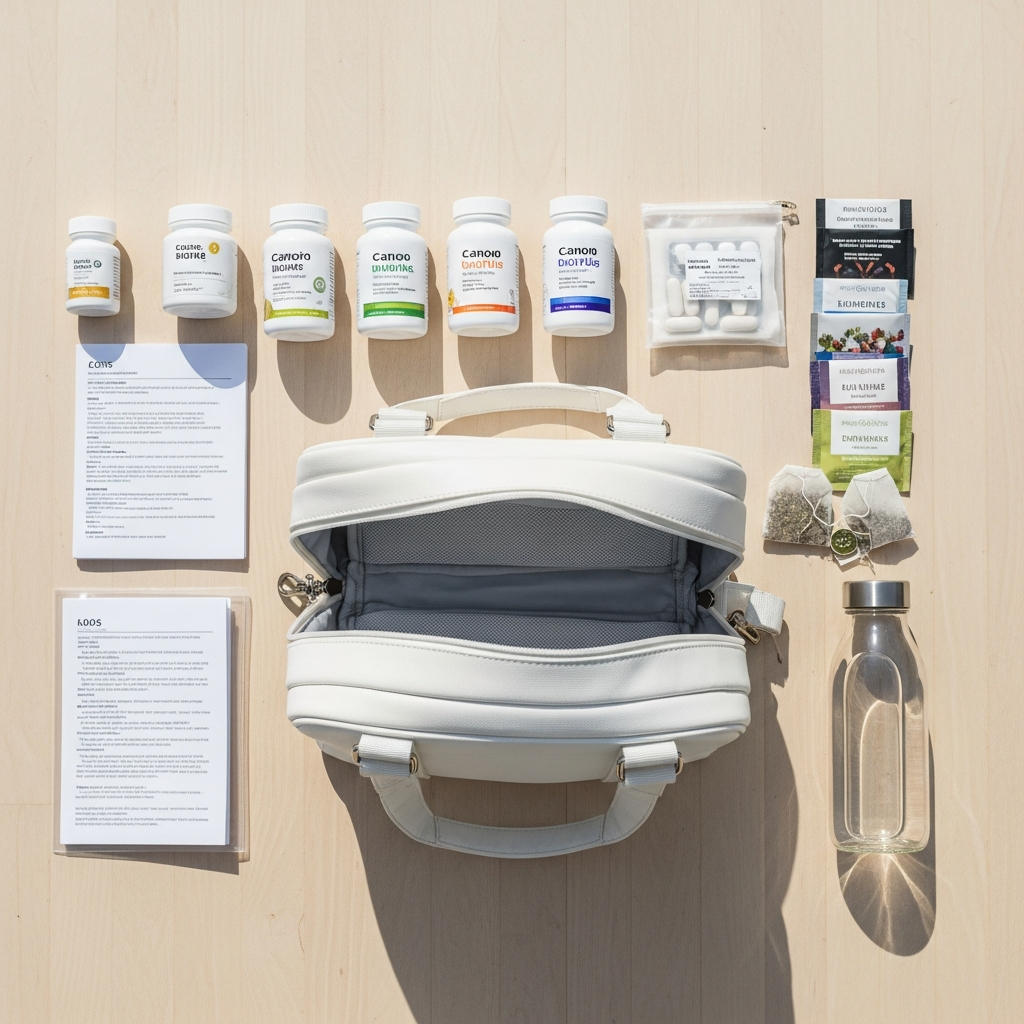
That trip changed how I approach travel entirely. And over the years — traveling with my son (now in deep remission) and my husband (20+ years in deep remission after three surgeries) — I've built a system that actually works. Not a list of every possible thing. A system with five clear categories that covers what you actually need, before something goes wrong.
As a naturopath, I've since helped many families build their own versions of this list. But the bones of it came from that pharmacy. From experience, not a textbook.
---
## Category 1: Medications and documentation
This is the non-negotiable foundation. Before anything else, this category has to be complete.
Key takeaway: Every medication your family member takes should travel in its original labeled packaging, with a signed letter from your gastroenterologist confirming the diagnosis, medication names, and dosages — translated into the local language if you're traveling internationally.
That document has saved us at a foreign hospital. Not exaggerated. When my husband needed medical attention during a trip years ago, having that letter meant the local team understood his history in under two minutes. Without it, we would have been starting from scratch.
Here's what goes in this category:
- All regular medications in original packaging
- A signed medical summary letter from your gastroenterologist (ask for this at your next appointment — most are happy to provide one)
- A list of medications with generic names, not just brand names (brand names differ between countries)
- Travel insurance documentation that explicitly covers pre-existing conditions
- Your gastroenterologist's contact details and after-hours number
If your family member is on a biologic that requires refrigeration, call your airline and hotel in advance. Most can accommodate cold storage — but only if you ask ahead of time.
---
## Category 2: Gut-support supplements
This is the category most people skip — and the one I hear about most when something goes wrong mid-trip.
Travel disrupts routine. Sleep changes. Food changes. Stress goes up. Time zones shift. All of these are known triggers for gut sensitivity, and the Crohn's & Colitis Foundation notes that stress and disrupted routine can contribute to symptom flares even during periods of remission.
Key takeaway: Bringing your regular gut-support supplements from home means your body isn't adjusting to a new brand or formulation while also adjusting to travel.
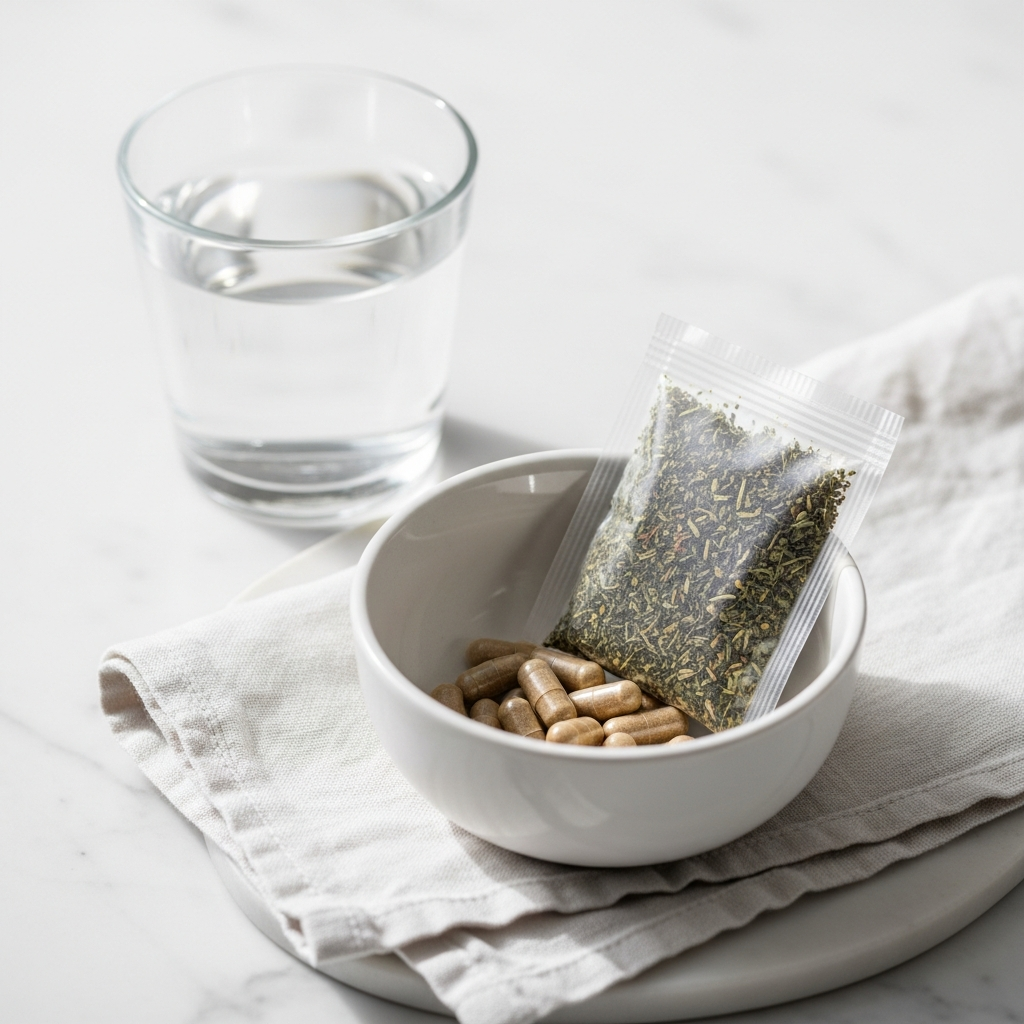
What I pack in this category:
- A quality probiotic in a travel-sized container (check if it needs refrigeration — many shelf-stable options now exist)
- Digestive enzymes, especially useful when eating unfamiliar foods
- L-glutamine powder in a small zip-lock bag (supports the gut lining during periods of stress)
- Magnesium — helpful for sleep regulation and gut motility
- Herbal teas: slippery elm, peppermint, or chamomile in individual sachets
A note on supplements: always discuss what you're taking with your gastroenterologist before travel, particularly if your family member is on immunosuppressants or biologics. Some supplements interact with medications. This list supports medical care — it doesn't replace it.
---
## Category 3: Comfort and symptom management
This is the practical layer — the things that make a difficult night manageable instead of miserable.
Key takeaway: Having a small symptom-management kit means you can respond quickly without a pharmacy run at midnight in an unfamiliar city.
What goes in this kit:
- A heat pack (the microwaveable kind, or a disposable heat patch for travel) — warmth on the abdomen can ease cramping
- Electrolyte sachets — dehydration is a real risk during a flare, and commercial sports drinks are often too high in sugar
- Wet wipes and barrier cream — essential for anyone dealing with perianal sensitivity
- A change of clothes in your carry-on, always, no exceptions
- Loose, comfortable clothing for long travel days — waistbands matter more than most people realize
I also pack a small notebook. Not for journaling — for tracking. If symptoms escalate during a trip, having a written record of what was eaten, what was taken, and when symptoms started is genuinely useful information for a medical team.
---
## Category 4: Safe food staples
This category is highly individual — what works for one person with Crohn's won't work for another. But the principle is the same: don't arrive somewhere new with nothing familiar to fall back on.
Key takeaway: Packing a small supply of known-safe foods means your family member always has a fallback option, even if the hotel breakfast is full of triggers.
What I typically include:
- Plain rice cakes or crackers in a zip-lock bag
- A small jar of nut butter (if tolerated)
- Individually wrapped herbal teas
- Protein bars with minimal ingredients (read every label — many contain chicory root or high-FODMAP sweeteners that can trigger symptoms)
- A small container of white rice if we're driving
Research restaurants before you arrive. Most cities now have apps or review sites where people note allergy-friendly or low-residue options. It takes 20 minutes of planning and saves hours of stress.
---
## Category 5: The emergency protocol
This is the one nobody wants to think about — and the one that matters most.
Key takeaway: Having a written plan for what to do if symptoms escalate means you make calm decisions instead of panicked ones.
Before every trip, I write out a one-page plan that covers:
- What symptoms would prompt us to seek medical care (not just discomfort, but the specific signs that mean we need a hospital)
- The nearest hospital to where we're staying
- The local emergency number (it's not 911 everywhere)
- A phrase card in the local language with key words: Crohn's disease, inflammatory bowel disease, my medication, I need a doctor
- Travel insurance claim number and process
This document lives in the same sleeve as the medical summary letter. If I ever need it, I know exactly where it is.

---
## The mindset shift that changes everything
Here's what I want to leave you with.
For a long time, travel felt like something we had to survive rather than enjoy. Every trip had an undercurrent of anxiety — what if something goes wrong, what if we're far from help, what if this is the trip that undoes the remission we've worked so hard for.
Building this system didn't eliminate the uncertainty. Crohn's doesn't come with guarantees, and I'd never promise you otherwise. But it changed the quality of the uncertainty. Instead of feeling unprepared, we felt ready. And that shift — from dread to readiness — is what allowed our family to actually be present on our trips.
My husband has been in deep remission for over 20 years. My son is in deep remission now. We travel. We enjoy it. Not because everything always goes perfectly, but because we stopped leaving things to chance.
You deserve that too.
---
## Common questions
Can someone with Crohn's travel internationally?
Many people with Crohn's travel internationally and do so successfully, particularly during periods of remission. The key is preparation: medical documentation, medication supply, travel insurance that covers pre-existing conditions, and a clear emergency plan. Always discuss travel plans with your gastroenterologist before you go.
How much medication should I pack?
A general guideline is to pack enough for your full trip plus an additional 2-week supply in case of delays. Keep medications in carry-on luggage, never in checked bags, and always in original labeled packaging.
What if my biologic needs refrigeration during travel?
Contact your airline and accommodation in advance — most can accommodate medical refrigeration needs. There are also specialist travel cases designed to keep biologics at the correct temperature for up to 48 hours. Your pharmacist or gastroenterologist can advise on the best option for your specific medication.
Should I tell travel companions about the Crohn's diagnosis?
This is a personal decision, but having at least one travel companion who understands the basics — what to do if symptoms escalate, where the medical documents are kept — can make a real difference in an emergency. You don't need to share everything. You just need one person who knows where the plan is.