Why I stopped serving brown rice (and what I learned)
The short answer: During a Crohn's flare or sensitive period, white rice is easier on the gut than brown rice because it's lower in insoluble fibre. Brown rice's outer bran layer is harder to digest and can irritate an already inflamed gut lining. White rice isn't a nutritional compromise — it's a deliberate, evidence-informed strategy for keeping the gut calm while it heals.\
\
Now let me tell you how I actually learned this.\
\
---\
\
## The meal I thought was helping\
\
When my son was going through a rough patch — not a full flare, but that unsettled, sensitive period that Crohn's families know well — I was doing everything I thought was right. Wholegrains. Lots of vegetables. Nothing processed.\
\
Brown rice was a staple. It's fibre-rich, nutrient-dense, lower on the glycaemic index. By every standard nutritional measure, it looked like the right call.\
\
But he kept struggling after meals. Cramping. Urgency. That worn-out look that tells you something isn't sitting right.\
\
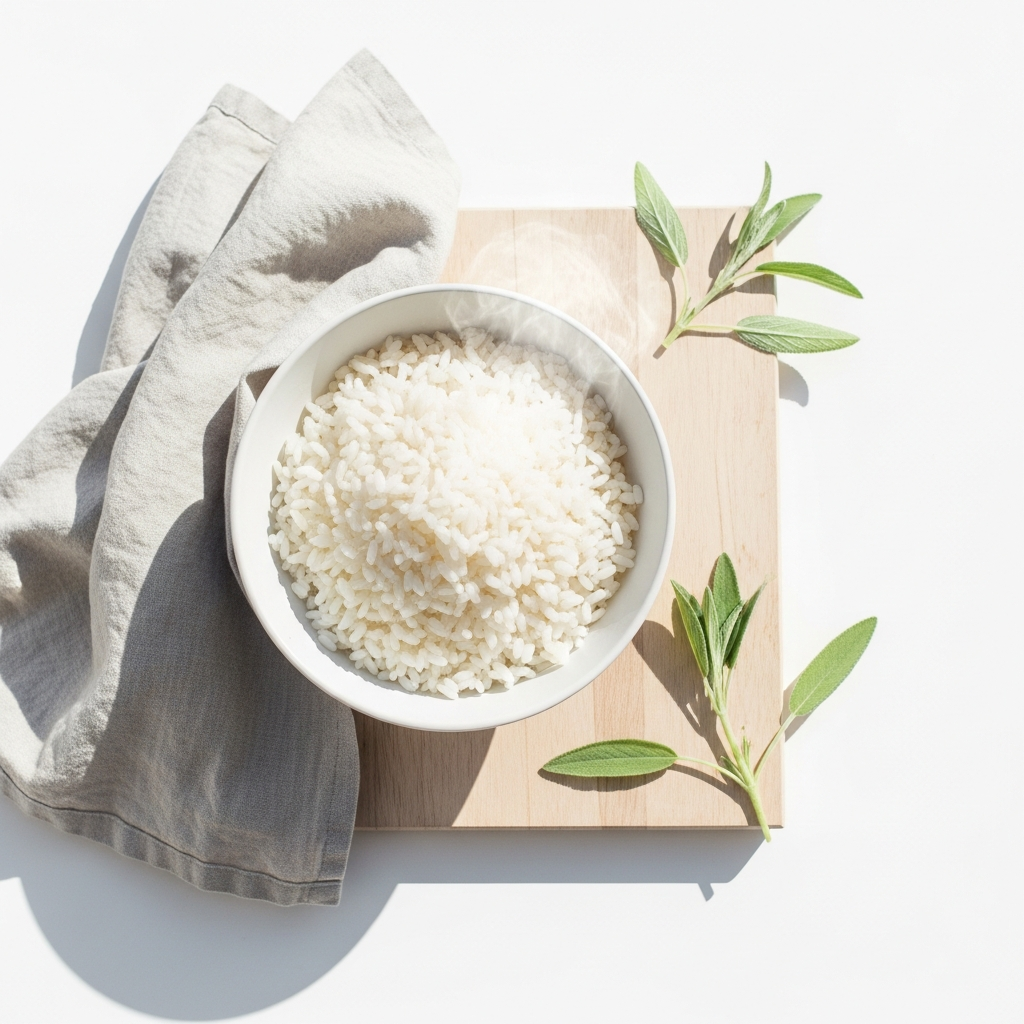
It wasn't until I started looking at digestibility — not just the nutrition panel — that I realised what was happening. And it changed how I feed my whole family.\
\
\
\
## What makes brown rice harder to digest?\
\
Brown rice and white rice start as the same grain. The difference is processing: brown rice retains its outer bran layer and germ. White rice has had those layers milled away, leaving mostly the starchy endosperm.\
\
That bran layer is where the insoluble fibre lives.\
\
Insoluble fibre is the kind that doesn't dissolve in water. It adds bulk to stool, speeds up transit time, and — in a healthy gut — helps keep things moving. For most people, that's genuinely beneficial.\
\
But for a gut that is inflamed, ulcerated, or in a sensitive post-flare state, insoluble fibre can act almost like an abrasive. It moves through the intestine largely intact, and in a gut where the lining is already compromised, that mechanical friction can worsen irritation, increase urgency, and make absorption harder.\
\
The Crohn's & Colitis Foundation includes low-residue and low-fibre dietary approaches as part of their guidance for managing flares — precisely because reducing the mechanical load on the gut can help ease symptoms during active inflammation.\
\
Key takeaway: Insoluble fibre is not bad food — it's the wrong food at the wrong time for an inflamed gut.\
\
## Why white rice works during sensitive times\
\
White rice is one of the most easily digested carbohydrates available. After milling, it is predominantly starch — broken down quickly and absorbed high in the small intestine, long before it reaches the most commonly affected sections of the gut in Crohn's disease.\
\
Here's what that means practically:\
\
- Less mechanical irritation. With the bran removed, there's very little residue left to move through the colon.\
- Easier absorption. The starch in white rice is rapidly converted to glucose and absorbed, which matters when inflammation is already compromising nutrient uptake.\
- Gentler transit. Lower fibre means slower, less forceful movement through the gut — which can reduce urgency and cramping.\
- Neutral flavour as a base. White rice pairs easily with other safe foods — poached chicken, cooked carrots, a little salt — making it a practical foundation for a gentle meal plan.\
\
As a naturopath, I sometimes hear concern that white rice is "empty calories." I understand the instinct. But in the context of a Crohn's flare or sensitive period, digestibility is the priority — not fibre content. You can't absorb nutrients from food your gut can't process.\
\
\
\
## When to use white rice — and when to reintroduce brown\
\
This is not a permanent swap. It's a ladder — which is exactly what the Safe Food Ladder series is about.\
\
During a flare or immediately post-flare, white rice is the right choice. It's gentle, it's predictable, and it gives the gut a chance to rest and recover.\
\
As symptoms stabilise and your gastroenterologist confirms things are settling, you can begin to reintroduce more complex foods — including, eventually, wholegrains like brown rice. The key is doing this gradually, one food at a time, so you can identify what your gut tolerates at each stage.\
\
For our family, the rule of thumb became: when in doubt, go back to white. Not as a failure, but as a strategy.\
\
My husband — who had three surgeries in his younger years and has now been in deep remission for over 20 years — still chooses white rice during any period where his gut feels even slightly unsettled. It's not about fear. It's about knowing your body and giving it what it needs, when it needs it.\
\
\
\
## How to make white rice more nourishing\
\
If you're in a sensitive period, here are a few naturopath-approved ways to make white rice more supportive — without adding fibre load:\
\
- **Cook it in a low-sodium bone broth** instead of plain water. This adds minerals and a small amount of easily absorbed protein without increasing fibre.\
- **Add a small amount of well-cooked, peeled zucchini or carrot.** Cooking until very soft and removing skins reduces the fibre content significantly while still adding micronutrients.\
- **A drizzle of good olive oil** adds calories and healthy fats that are generally well-tolerated, even during flares.\
- **Season simply** — salt, a little lemon juice, or a small amount of fresh parsley if tolerated. Avoid spices, garlic, and onion during sensitive periods.\
\
Always work with your gastroenterologist and dietitian when making dietary changes during a flare. These suggestions are supportive — they are not a replacement for your medical care plan.\
\
---\
\
## Common questions\
\
Is white rice actually good for Crohn's disease?\
Yes — during flares and sensitive periods, white rice is one of the most gut-friendly carbohydrate sources available because it is low in insoluble fibre and easy to digest. It is a standard recommendation in low-residue dietary guidance for IBD.\
\
Can I eat brown rice if I have Crohn's?\
Many people with Crohn's tolerate brown rice well during remission. During a flare or sensitive period, brown rice is generally not recommended because its insoluble fibre content can irritate an inflamed gut lining.\
\
How long should I stay on white rice during a flare?\
This depends on your individual situation and should be guided by your gastroenterologist. As a general principle, a low-residue approach is typically used during active inflammation and gradually relaxed as symptoms improve.\
\
What else can I eat alongside white rice during a flare?\
Other commonly tolerated low-residue foods include poached or baked chicken, well-cooked peeled vegetables (carrots, zucchini, potato), eggs, and plain crackers. Always introduce foods one at a time and note your response.\
\
---\
\
If this was helpful, share it with someone who is navigating food choices with Crohn's — or subscribe to The Crohn's Method newsletter for more evidence-informed, family-tested guidance at thecrohnsmethod.com.